Publications Index by ISI
An overview of the Institute for Systems Integrity’s published work, highlighting foundational papers and thematic groupings.

This section brings together our published work — essays, position pieces, and research-informed commentary — focused on system integrity, governance, and decision-making in complex environments.
Our publications examine how systems behave under pressure: where incentives misalign, where accountability fragments, and where design choices shape real-world outcomes in health, technology, and public institutions.
© 2026 Institute for Systems Integrity. All rights reserved.
Content may be quoted or referenced with attribution.
Commercial reproduction requires written permission.
Editorial commitments:
Clarity over volume
We publish selectively, prioritising substance, evidence, and coherence over frequency.
Practice-informed insight
Our work is grounded in lived experience — connecting frontline realities with board-level, regulatory, and policy contexts.
Respect for complexity
We resist oversimplification. Many of the challenges facing institutions today cannot be reduced to slogans or single-factor explanations.
Foundations Article #1
Anchor papers that establish the Institute’s core lenses and conceptual frameworks
 Institute for Systems Integrity
Latest Publication:
🚨 WHO INVESTIGATES THE INVESTIGATORS? When the People Holding Everyone Else Accountable Become Accountable to Nobody
Organisations investigate misconduct, bullying, patient harm, professional behaviour and safety failures — but who scrutinises the people and systems doing the investigating? Who Investigates the Investigators? examines a largely overlooked governance risk: what happens when investigative processes themselves become difficult to question. We explore institutional pseudo-corroboration, where one allegation can appear to become multiple pieces of evidence as it travels through organisational processes; accountability asymmetry, where individuals face intense scrutiny while the machinery judging them remains comparatively opaque; and the human biases that can influence even independent investigations. The paper argues that strong accountability does not mean endlessly reinvestigating every decision. It means governing the investigation system itself — protecting complainants, ensuring fairness for respondents, preserving investigator independence, testing alternative explanations and giving boards meaningful assurance that the process itself remains worthy of trust.
 Institute for Systems Integrity
🚨 WHAT IF YOUR ORGANISATION KNOWS IT IS WRONG — BUT CANNOT AFFORD TO ADMIT IT? Escalation of Commitment, Institutional Self-Protection and the Governance of Reversal
What happens when an organisation discovers that it may be wrong — after careers, reputations, processes and institutional authority have already been invested in being right? This ISI paper examines the “Institutional Cost of Reversal”: how escalation of commitment, motivated reasoning, procedural echo and organisational silence can make correcting a conclusion progressively harder. Drawing lessons from Challenger, Columbia, Mid Staffordshire and the Boeing 737 MAX, it argues that high-integrity governance requires more than the ability to reach decisions. Organisations must preserve the ability to reverse them when credible evidence changes — beginning with one deceptively simple question: What evidence would make us change our mind?
 Institute for Systems Integrity
WHEN REPORTING BECOMES A WEAPON.... How power, professional rivalry and group dynamics can distort healthcare’s safety systems
Healthcare cannot function without people willing to raise concerns—but reporting systems operate inside human systems shaped by power, hierarchy, rivalry, grievance, loyalty and group dynamics. In this paper, we examine how a genuine safety signal can become distorted as it moves through reporting, social transmission, investigation and institutional decision-making. Introducing concepts including Notification Signal Integrity™, Signal Lineage™, Coalition Amplification™, the Notification Cascade™ and the Procedural Echo Effect™, they argue that protecting reporters and protecting reported professionals are not opposing goals. High-integrity systems must make genuine reporting safe while independently testing evidence, tracing the origins of apparently corroborating concerns and distinguishing allegation from finding, repetition from independent corroboration, and multiple processes from multiple independent signals. The answer is not to report less—it is to govern reporting better.
 Institute for Systems Integrity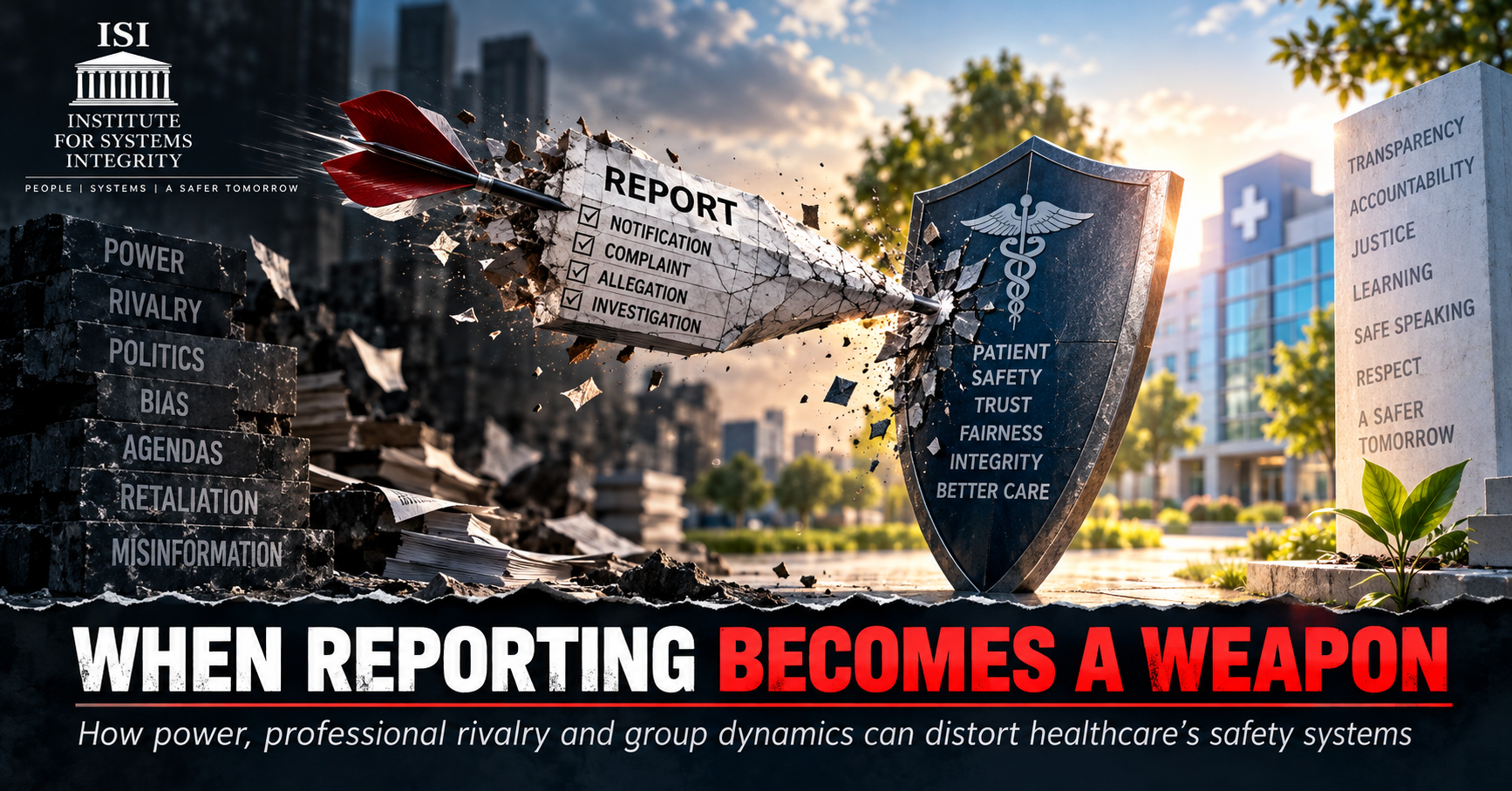
🚨 BULLYING IN HEALTHCARE: THE PLAYBOOK WE NEVER MEANT TO WRITE: .. How legitimate organisational systems can become tools of coercion, exclusion and reputational harm — and why institutional trustworthiness matters
What if the most dangerous bully in healthcare never shouts, threatens or openly breaks a rule — but simply knows how to use the system? In this Institute for Systems Integrity paper, examine how legitimate mechanisms such as performance management, complaints, credentialing, investigations and regulatory reporting can, when poorly governed or misused, become instruments of coercion, exclusion and reputational harm. The paper explores the warning signs of institutional bullying, the risks of narrative capture and procedural escalation, and the human consequences of sustained organisational threat, while making clear that genuine reporting and accountability must remain protected. Moving beyond psychological safety, the authors examine organisational safety, institutional trustworthiness and Trust Literacy, asking a harder question of healthcare leaders and boards: not simply whether people feel safe to speak, but what the organisation actually does after they do.
 Institute for Systems Integrity
🚨 GOOD LEADERS LEARN THROUGH IMITATION, BUT MATURE LEADERSHIP REQUIRES CONVERTING WHAT IS BORROWED INTO SOMETHING GENUINELY THEIR OWN.- The Leadership Replication Trap
 Institute for Systems Integrity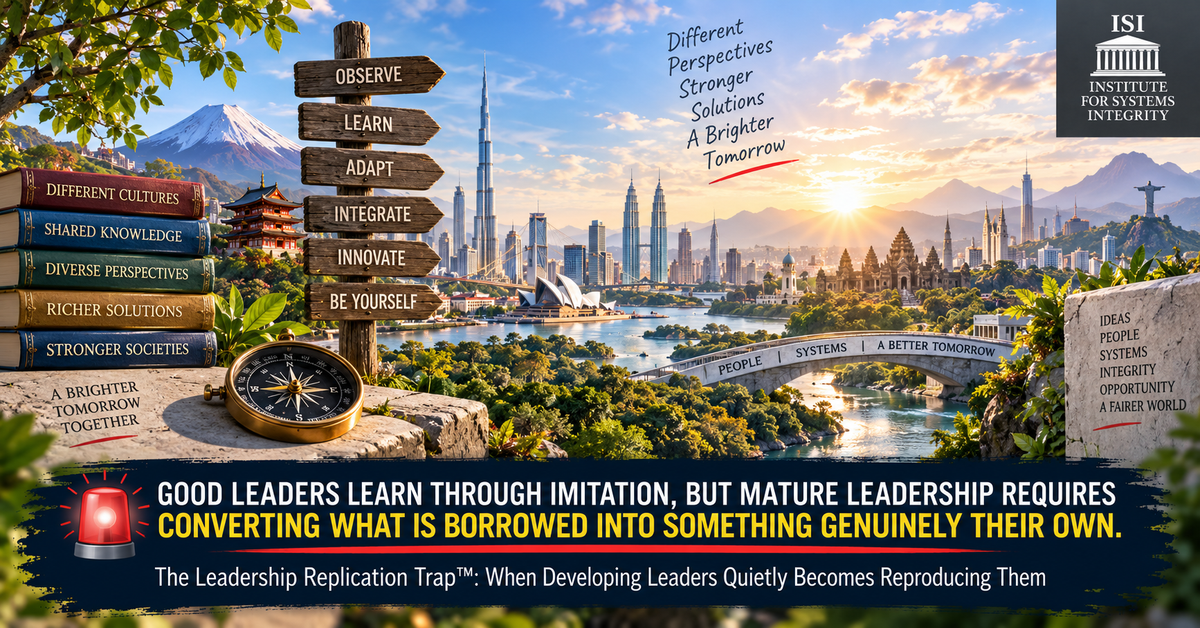
WORKPLACE GHOSTING: WHEN SILENCE BECOMES A GOVERNANCE FAILURE 🚨 THE MOST DANGEROUS SILENCE IN AN ORGANISATION IS NOT ALWAYS THE SILENCE OF FEAR
 Institute for Systems Integrity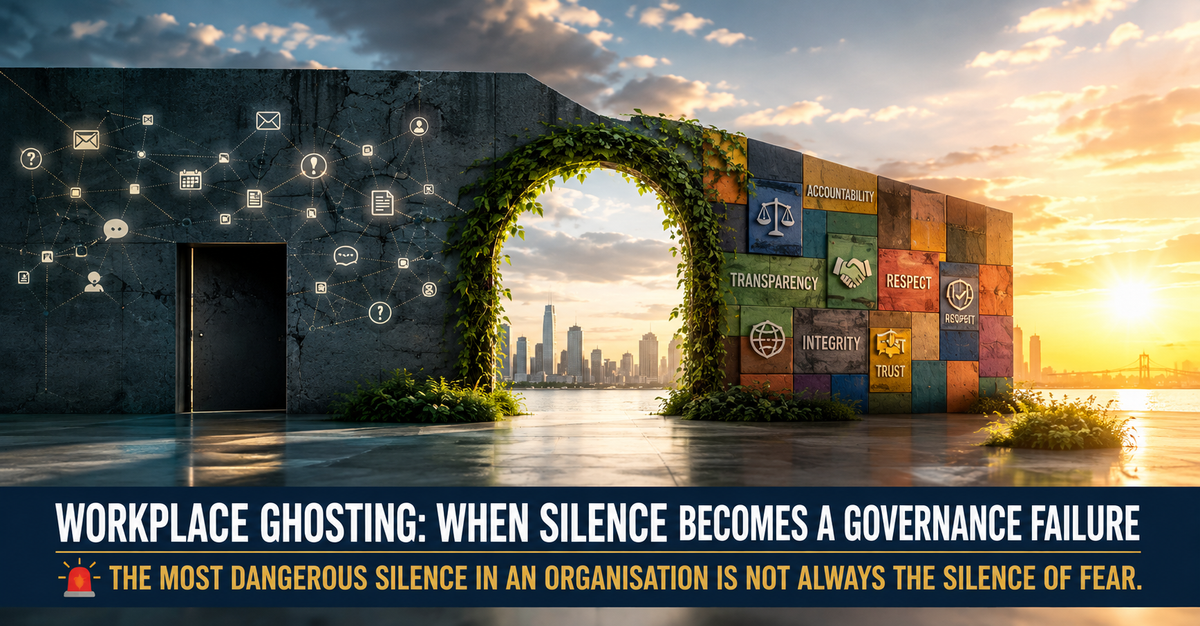
When Trust Is Tested: Responding to AI-Related Harm in Healthcare From Adverse Events to System Learning and Continuing Assurance
When artificial intelligence contributes, or may have contributed, to patient harm, the response should not stop at asking whether the clinician or the algorithm was responsible. This paper argues that an AI-related adverse event should first be treated as a patient-safety event while also recognising that it may be a wider system signal. It introduces a 12-function response pathway — Protect, Contain, Preserve, Identify, Disclose, Report, Investigate, Attribute, Correct, Validate, Reauthorise and Surveil — and examines how healthcare organisations can move from incident response to system stewardship through proportionate investigation, accountability, continuing assurance and learning across the AI lifecycle.
 Institute for Systems Integrity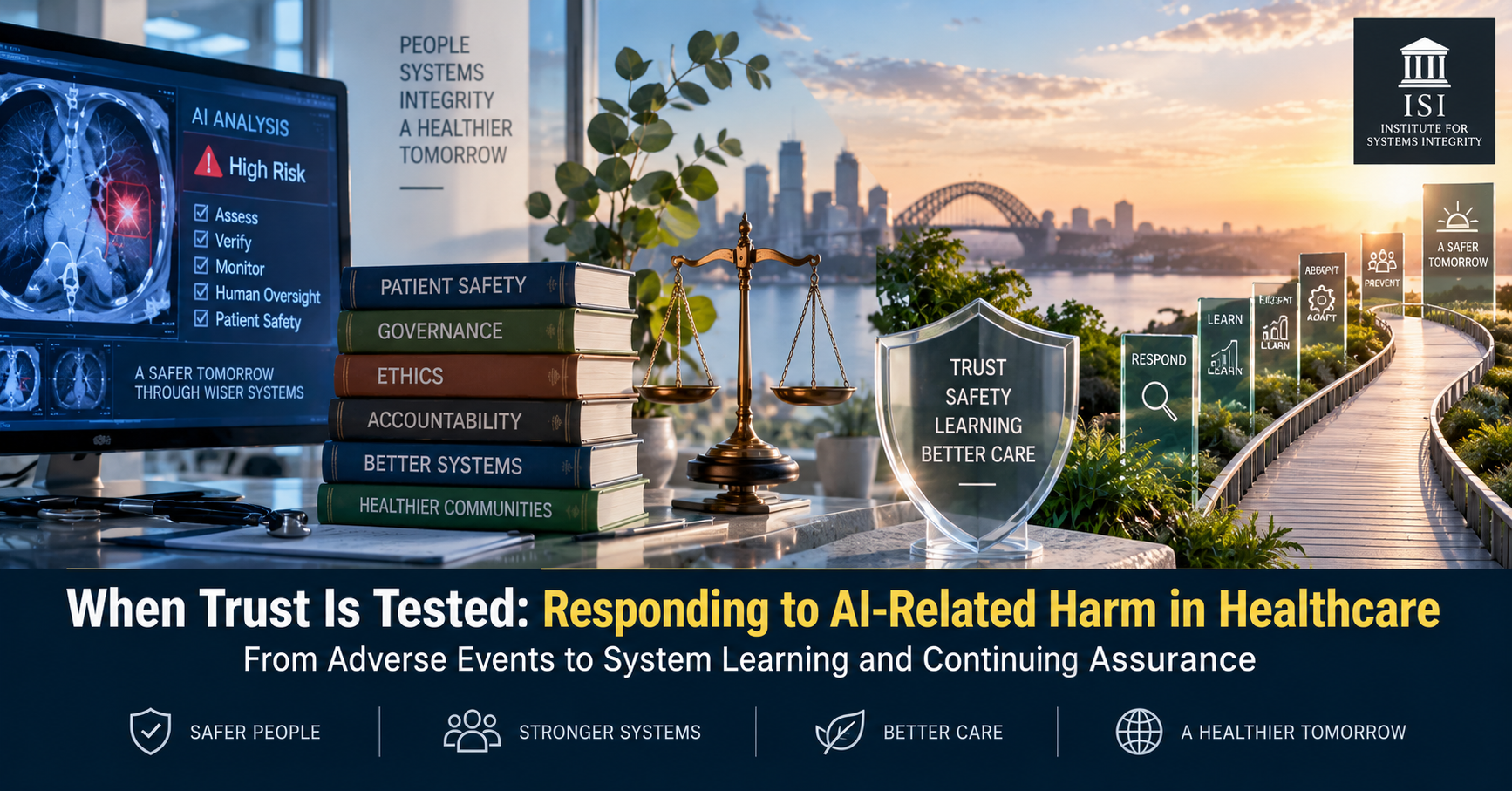
WHY DO WE WAIT FOR PEOPLE TO FAIL BEFORE WE GIVE THEM WHAT THEY NEEDED TO SUCCEED? Transition Integrity™: Why High-Integrity Organisations Prepare People Before Predictable Transitions Become Preventable Failures
Organisations spend enormous effort selecting the right people, yet often pay far less attention to designing the transitions through which those people must succeed. From graduates entering work and clinicians becoming leaders to executives becoming CEOs, directors entering boardrooms and employees adapting to AI-enabled roles, predictable transitions can create predictable vulnerabilities. In this paper, the Institute for Systems Integrity introduces Transition Integrity™ — the extent to which organisations anticipate consequential transitions and provide the capability, role clarity, contextual knowledge, relationships, authority and recovery support required to navigate them successfully. The paper also introduces Transition Debt™ and the Preparation–Accountability Gap™, challenging boards and leaders to ask an uncomfortable question: when a transition was foreseeable, how much responsibility does the organisation carry for designing the conditions in which people were expected to succeed?
 Institute for Systems Integrity
🚨 STOP MANAGING THE DEPARTMENTS...START MANAGING THE FLOW.--The Operational Integrity Loop : A Practical Model for Matching Demand, Capacity and Constraints Before the Patient Finds the Failure
Healthcare organisations can have full rosters, occupied beds, busy theatres and departments hitting their KPIs while patients remain stuck between parts of the system. In this article, Florinda Frentescu and Dr Alwin Tan introduce the Operational Integrity Loop™ — SEE → TEST → FIND → PROTECT → LEARN: a practical model for understanding real demand, testing usable capacity, identifying the constraint limiting flow, acting early to protect the patient journey, and learning from what nearly failed before the next shift begins. Its central proposition is deliberately simple: good operations is not about keeping every resource busy; it is about having the right capacity at the right constraint at the right time so the whole system can move safely, reliably and with purpose.
 Institute for Systems Integrity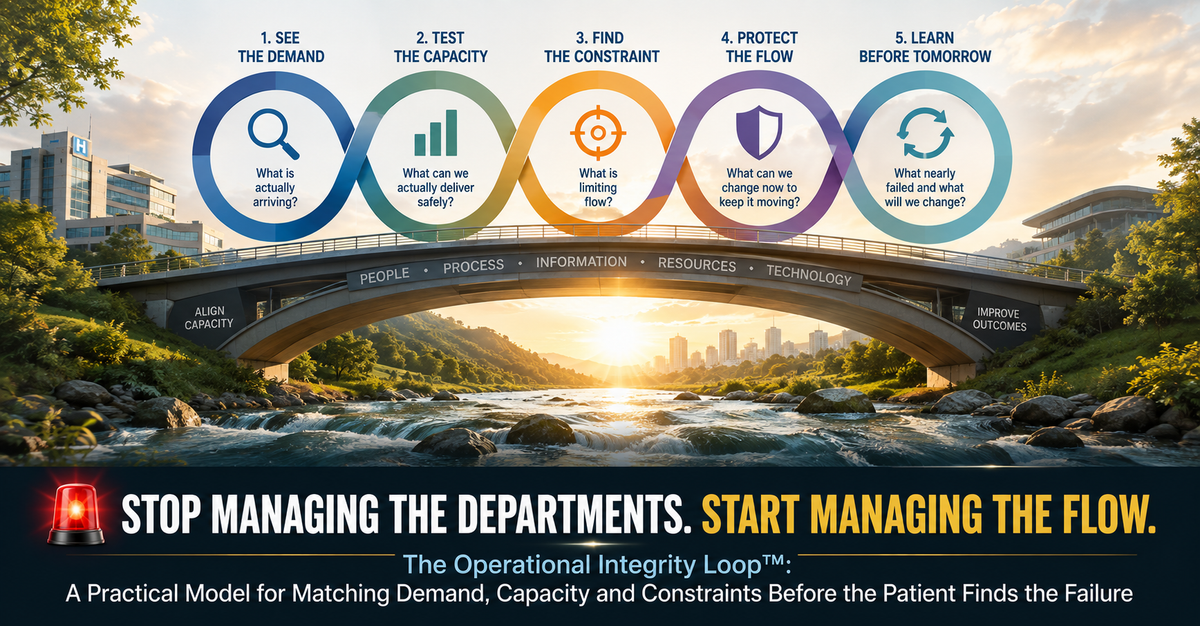
🚨 THE SYSTEM PUSHED THEM TO 150%. THE MISTAKE WAS 100% THEIRS? - The Accountability Transfer™ : How organisations create the conditions for failure, blame the person closest to the patient — and leave the decisions above them largely untouched.
What happens when an organisation repeatedly demands extraordinary performance from frontline workers — then treats the eventual human mistake as entirely theirs? The System Pushed Them to 150%. The Mistake Was 100% Theirs? introduces The Accountability Transfer™, describing how risk can be created through staffing, workload, resource and leadership decisions, absorbed through repeated frontline compensation, and then concentrated on the person closest to an adverse outcome when that risk finally materialises. ISI argues that this is not a case for removing individual accountability, but for full-chain accountability: examining both the frontline decision and the upstream conditions that shaped it. If replacing the individual while leaving the system unchanged means the same failure could happen again, the investigation is not finished.
 Institute for Systems Integrity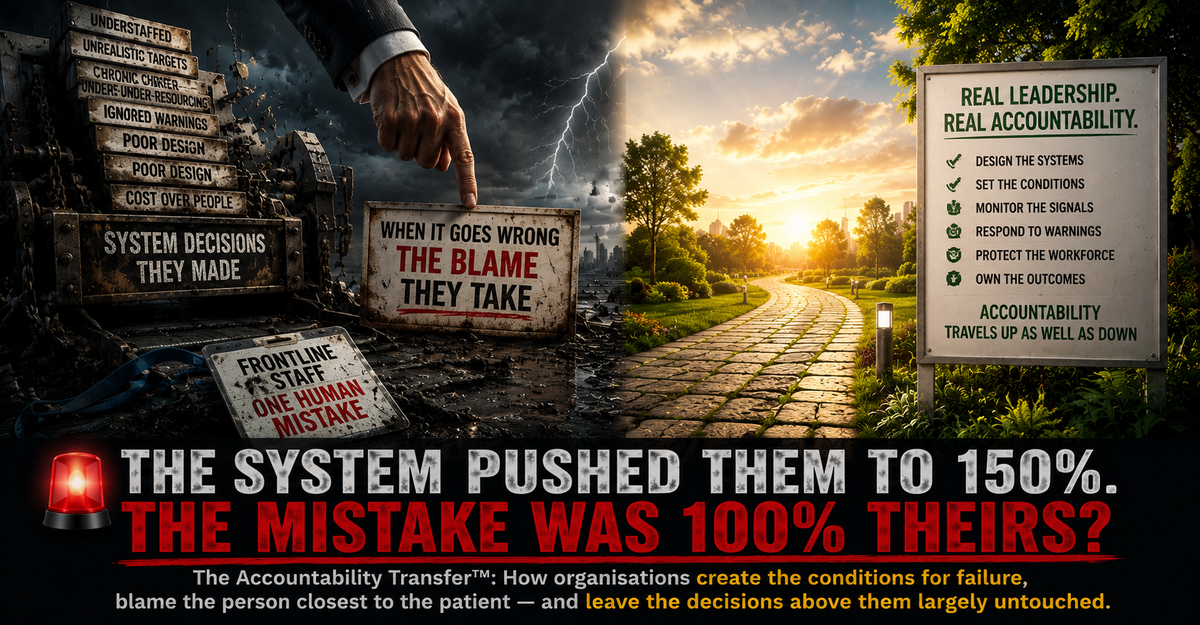
YOUR BOARD PACK SAYS EVERYTHING IS FINE. HOW WOULD YOU KNOW IF IT WAS WRONG? The Governance Question Every Board Should Be Able to Answer Without Asking Management Again.
Boards are expected to exercise independent judgement while relying heavily on information produced by the organisations they govern. This paper asks a deceptively simple question: how does a board know when the picture in front of it is wrong? ISI introduces the Board Reality Check™, a practical governance discipline for testing material claims through source evidence, independent challenge, variance, contradiction, silence and direct exposure. The argument is not that management cannot be trusted, but that no single reporting pathway should become the organisation’s only definition of reality. In an era of increasingly sophisticated dashboards and AI-generated summaries, boards may need to become just as interested in what does not fit the story as in what confirms it.
 Institute for Systems Integrity
🚨 BROKEN SYSTEMS SURVIVE ON HEROES – When 150% Becomes the Expectation, Appreciation Falls to minus 70% — And Extraordinary People Become the Invisible Infrastructure Holding Ordinary Operations Together
What if your organisation is only working because extraordinary people keep saving it? Broken Systems Survive on Heroes examines what happens when workarounds, discretionary effort, tacit knowledge and repeated human rescue stop being exceptional and quietly become part of normal operations. When yesterday’s 150% effort becomes today’s 100% expectation — while appreciation can feel like minus 70% — capable people may begin functioning as invisible infrastructure, allowing dashboards to remain green while underlying system fragility goes unseen. ISI argues that heroism should be recognised, but repeated heroism should be investigated: if ordinary organisational performance depends on extraordinary human sacrifice, the real governance question is not how resilient the people are, but why the system requires so much resilience from them in the first place.
 Institute for Systems Integrity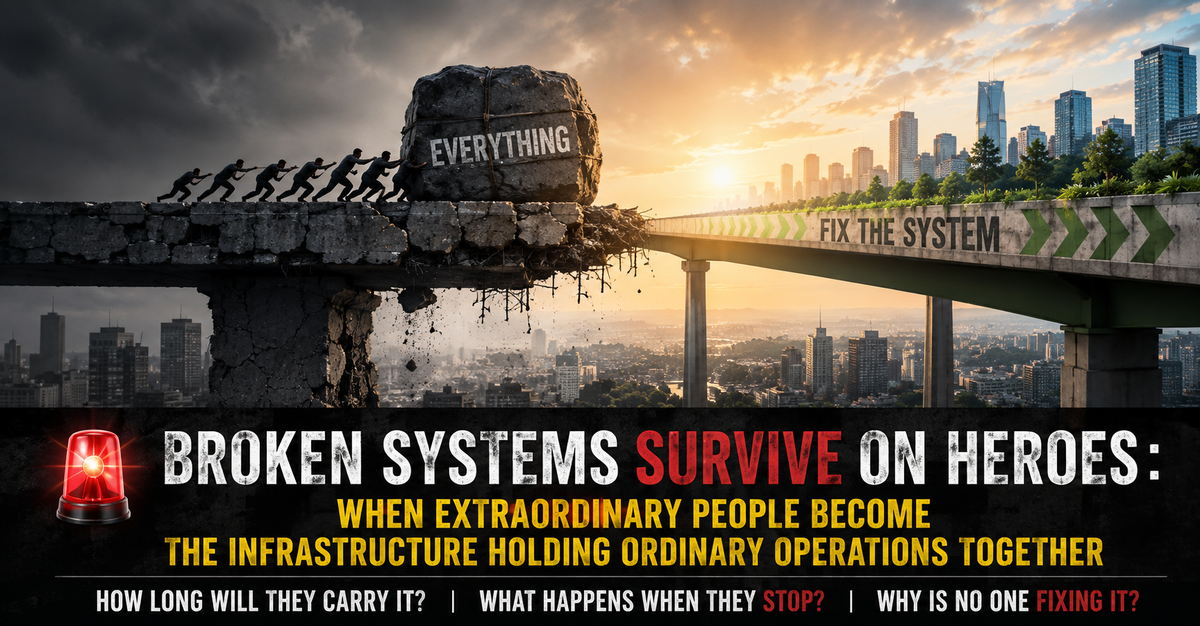
When AI Influences the Decision, Who Carries the Accountability? From Shared Accountability to Accountability Alignment in Healthcare
Artificial intelligence is increasingly influencing diagnosis, prediction, triage and clinical decision-making, but when something goes wrong, accountability can become either concentrated at the frontline or dispersed until meaningful ownership disappears. In Volume II of the ISI Series on AI Accountability, we examine this tension through the concepts of Accountability Displacement and Accountability Diffusion, and propose Accountability Alignment as a governance lens for connecting responsibility to the knowledge, control, capacity and authority held by clinicians, developers, vendors, healthcare organisations, executives, boards and regulators across the AI lifecycle. The paper argues that meaningful human oversight requires more than simply keeping a clinician “in the loop”: healthcare systems must preserve the information, capability and practical authority clinicians need to exercise meaningful judgement while ensuring that those who shape AI-enabled care remain answerable for the influence they exercise.
 Institute for Systems Integrity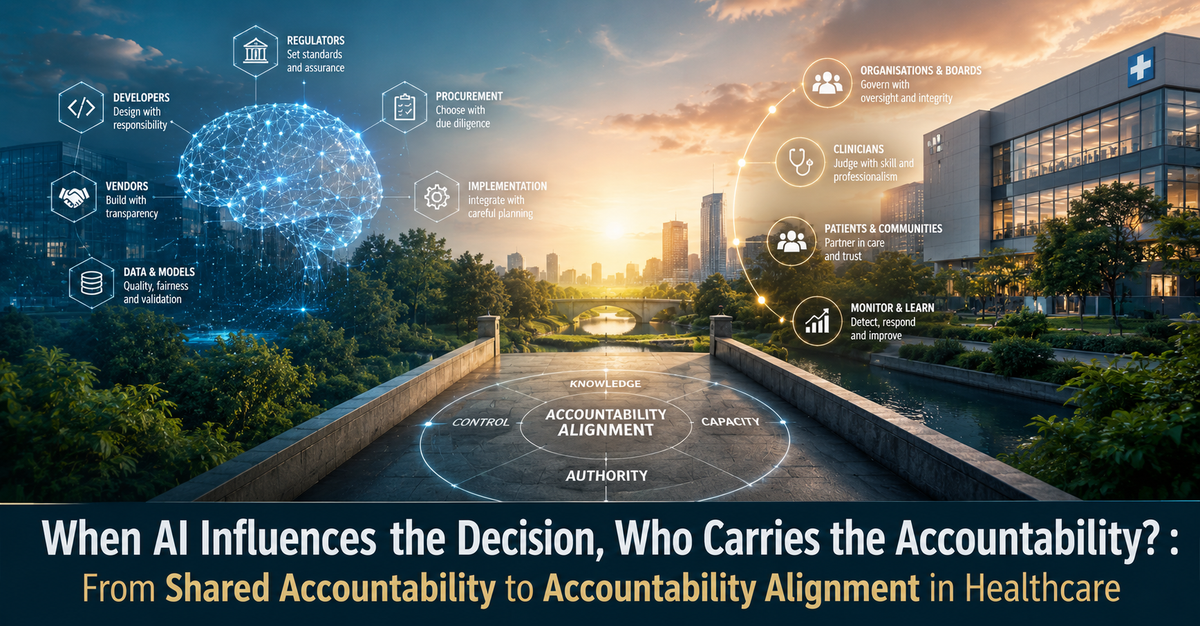
THE SPONSORSHIP INTEGRITY GAP™ : Why Organisations Keep Developing Talent But Fail to Advance It
Organisations invest heavily in mentoring, leadership development and capability building, yet development alone does not determine who advances. Between capability and leadership sits a less visible system of recognition, visibility, advocacy and opportunity. The Sponsorship Integrity Gap™ examines what happens when access to career-shaping opportunities becomes influenced more by proximity, familiarity or informal networks than demonstrated readiness. It argues that sponsorship is not simply a career-development issue but a governance issue, because opportunity compounds into experience, credibility and ultimately institutional authority. The question is not simply who has a sponsor. It is whether the system that converts capability into opportunity has integrity.
 Institute for Systems Integrity
🚨 WHEN THE KPI BECOMES THE REAL PURPOSE : How Organisations Sacrifice Shared Understanding, Shared Purpose — And Sometimes the Very Outcome They Were Trying to Protect
KPIs are supposed to serve organisational purpose — but what happens when the organisation begins serving the KPI? In this Institute for Systems Integrity paper, we examine the distinction between shared understanding, shared purpose and shared performance pressure, and explore how targets can evolve from measurement tools into powerful behavioural governance mechanisms. We introduce the KPI Undercurrent — the persistent pressure created by what organisations measure, reward, escalate and punish — and propose Purpose–Metric Inversion to describe the point at which achieving the proxy begins to supersede achieving the purpose it was created to represent. Drawing on research into goal setting, Goodhart effects, goal displacement, mission drift and performance gaming, the paper argues that organisations can achieve extraordinary alignment, accountability and KPI performance while still moving away from their underlying purpose. The governance challenge is therefore not simply to ask whether the KPI is green, but whether optimising it is still producing more of the outcome the organisation exists to protect.
 Institute for Systems Integrity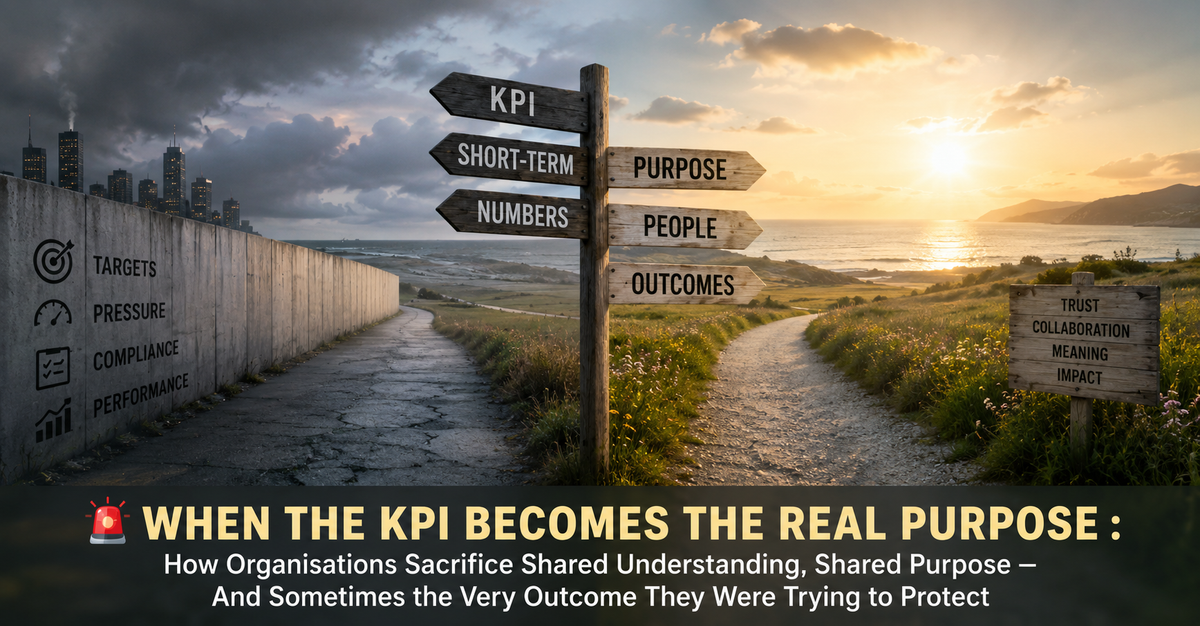
🚨 WHEN ACCOUNTABILITY DEPENDS ON WHO YOU ARE
How Power, Status and Institutional Value Distort Justice in Healthcare
Healthcare needs accountability—but accountability itself can become distorted when power enters the process. In Part III of ISI's Tribalism in Healthcare series, we examine how status, professional belonging, relationships and institutional value may influence whose concerns are believed, whose conduct receives context, who faces scrutiny and which version of an event ultimately becomes organisational truth. We introduce the Accountability Distortion Pathway™, Context–Scrutiny Divide™, Accountability Elasticity™, Accountability Counterfactual™ and Accountability Integrity Framework™ as governance tools for examining whether comparable evidence produces comparable accountability pathways. The central question for boards is deliberately uncomfortable: if the evidence stayed the same but the person changed, would the outcome change? Because when power can alter accountability, the consequences extend beyond individual fairness—they affect speaking up, workforce trust, information integrity, patient safety and the board's ability to know what is really happening inside the organisation.
 Institute for Systems Integrity
THE MOST EXPENSIVE THING ABOUT LEADERSHIP DEVELOPMENT... ...IS PRETENDING IT WORKED
Leadership development has become one of the least-governed investments in modern organisations. While boards carefully monitor attendance, completion rates and programme costs, they rarely examine whether executive education actually improves organisational judgement, governance, culture or decision-making. This paper argues that the true measure of leadership development is not what individuals learn, but what organisations become capable of after that learning returns to the workplace. Introducing the Leadership Transfer Integrity™ Framework, the Institute for Systems Integrity proposes a new governance approach for evaluating whether leadership investment translates into measurable organisational capability rather than simply producing certificates, satisfied participants and the illusion of progress.
 Institute for Systems Integrity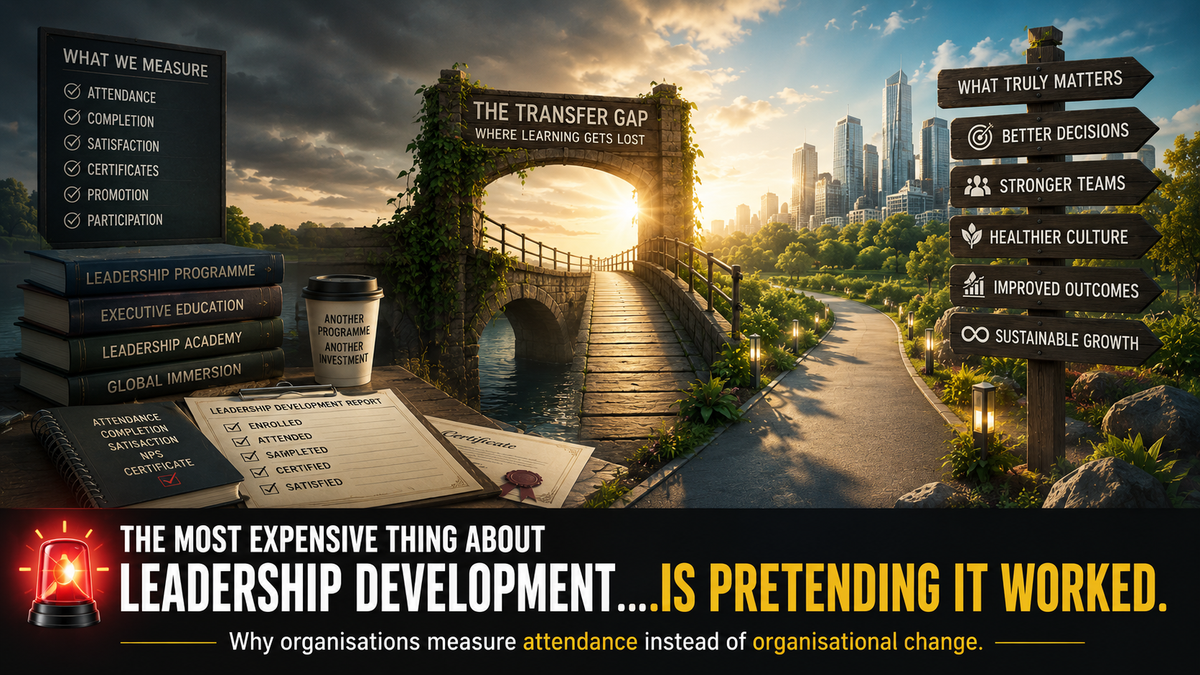
THE TRIBE WITHIN THE TRIBE : Why the Greatest Divisions in Healthcare Often Exist Inside the Same Profession
Healthcare’s most consequential divisions may not exist between doctors, nurses, managers and allied health professionals, but within those professions themselves. The Tribe Within the Tribe examines the informal hierarchies that influence who receives credibility, opportunity, scrutiny, forgiveness and institutional protection, and asks what happens when belonging and organisational influence begin shaping accountability. Introducing the Protection Gradient™ and Commercial Protection Gradient™, the paper explores how institutional and commercial value may alter the perceived cost of challenging influential individuals, allowing unequal accountability and organisational blind spots to emerge. It argues that these dynamics should not be dismissed as workplace culture or interpersonal politics, but recognised as a governance issue because they can affect organisational learning, workforce integrity and ultimately patient safety.
 Institute for Systems Integrity
EMPATHY IS NOT A SOFT SKILL. BUT IT IS NOT A GOVERNANCE SYSTEM EITHER.: - Why understanding people improves organisational intelligence—but only justice, accountability and redesign can convert understanding into change
Most organisations now recognise empathy as an essential leadership capability. Yet understanding people is only the first step. Empathy may reveal hidden risks, pressures and human realities, but it cannot redesign unsafe systems, ensure fairness or strengthen governance on its own. This article argues that empathy should be understood as an organisational sensing capability that improves information fidelity, while justice, accountability and system redesign remain the mechanisms that transform insight into meaningful organisational change. It challenges leaders and boards to move beyond listening—and ask whether what they hear is actually changing how their organisations work.
 Institute for Systems Integrity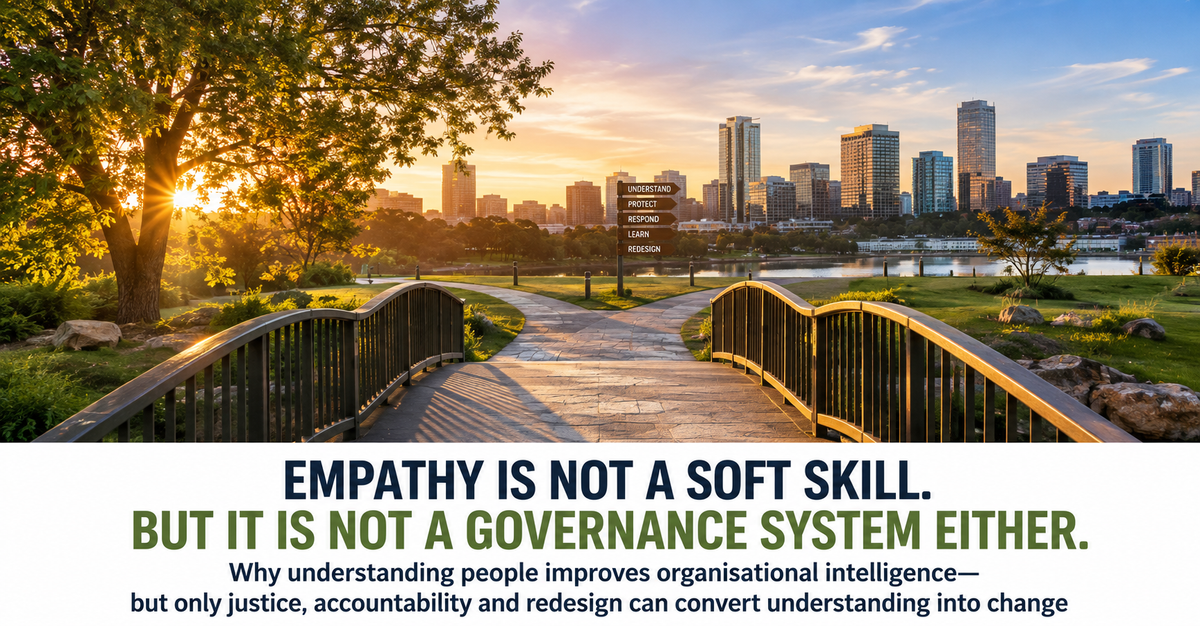
AI MAY NOT REPLACE YOUR EXPERTS. IT MAY PREVENT YOU FROM PRODUCING THE NEXT GENERATION.
Artificial intelligence is changing far more than productivity. It is changing the way organisations develop expertise. For generations, professional judgement emerged through repetition, observation, feedback and progressively greater responsibility. As AI automates many of these developmental experiences, organisations face a governance challenge that extends well beyond technology adoption. This paper argues that the future will not belong to organisations with the most advanced AI, but to those that deliberately preserve and strengthen the human processes through which independent judgement, professional wisdom and future leaders are created. AI governance is therefore not only about managing technological risk—it is about safeguarding the organisational capability to produce the next generation of experts.
 Institute for Systems Integrity
HEALTHCARE DOES NOT HAVE A TEAMWORK PROBLEM.: IT HAS A TRIBALISM PROBLEM.: How Professional Boundaries Fragment the Patient Journey
Healthcare has become exceptionally good at developing professional expertise, yet patients continue to experience fragmented journeys across departments, organisations and services. This paper argues that the underlying challenge is not simply communication or teamwork, but the governance of the boundaries separating professional, organisational and institutional tribes. , It introduces the Healthcare Tribal Integrity Framework™, Journey Ownership Gap™ and Critical Integrity Interfaces™ to provide boards, executives and healthcare leaders with a practical governance framework for protecting continuity of care across increasingly complex health systems.
 Institute for Systems Integrity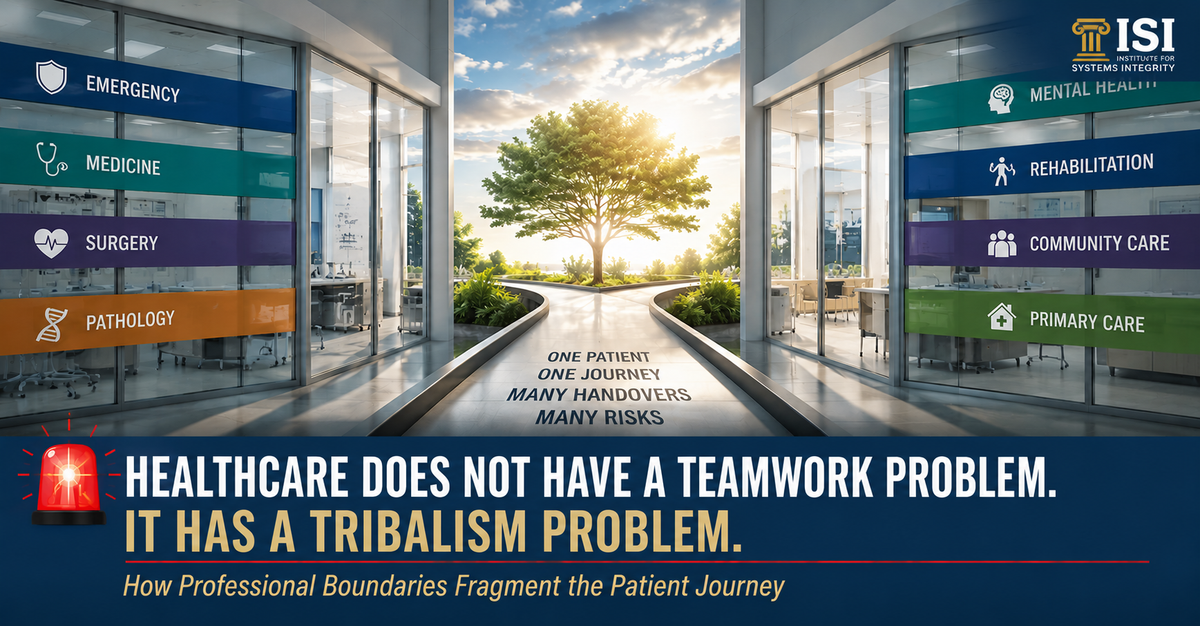
THE JUDGEMENT ENVIRONMENT SCORECARD™ How boards can govern what they cannot directly observe
Professional judgement is often regarded as an individual capability, yet every clinical decision is influenced by the organisational environment in which it is made. Boards cannot directly observe thousands of decisions occurring across a healthcare system each day, but they can govern the conditions that make sound judgement more—or less—likely. This paper introduces the Judgement Environment Scorecard™, a practical governance framework that shifts oversight from retrospective outcomes to prospective assurance by examining the organisational conditions that support independent professional judgement, psychological safety, organisational learning and patient safety. Rather than asking only whether clinicians made the right decisions, the Scorecard asks whether the system consistently enables them to do so.
 Institute for Systems Integrity
THE MOST UNDERVALUED STAKEHOLDER IN HEALTHCARE MAY BE THE ONE KEEPING THE SYSTEM FUNCTIONING :
Why Allied Health Is Often the First to Be Cut, the Last to Be Funded, and One of the Most Expensive Workforces to Underestimate
Healthcare can measure the emergency presentation, the operation, the occupied bed and the length of stay. It is far less capable of measuring the fall that never occurred, the aspiration prevented, the independence preserved or the deterioration identified before it became a crisis. Very often, allied health is central to those outcomes. In this joint collaboration, Institute for Systems Integrity paper, we examine why allied health remains one of healthcare’s least visible strategic assets—and why reducing the workforce that protects function, supports recovery and prevents future demand may create costs that eventually reappear elsewhere across the system.
 Institute for Systems Integrity
GOOD LEADERS DON'T THROW THEIR TEAM UNDER THE BUS. : Weak Organisations Force Them To
When organisations face a crisis, the first question is often, "Who is responsible?" Yet that instinct may reveal a deeper problem. High-performing organisations distinguish accountability from blame, recognising that most failures emerge from complex systems rather than isolated individuals. This article explores why scapegoating frequently reflects organisational weakness rather than leadership strength, how fear undermines learning and psychological safety, and why leaders who stand beside their teams during adversity build more resilient, trustworthy and effective organisations.
 Institute for Systems Integrity
Stewarding Healthcare in the Age of Artificial Intelligence : From Trustworthy Systems to Shared Accountability
Artificial intelligence is rapidly becoming embedded across healthcare, but trustworthy technology cannot exist independently of trustworthy institutions. In this joint Institute for Systems Integrity publication, we examine how responsibility is distributed across the healthcare AI lifecycle—from data creation and system design to procurement, clinical use, oversight and patient impact. Introducing The Integrity Chain™, the paper argues that accountability must be shared without becoming diluted, and that boards, executives, clinicians, developers, regulators and policymakers each retain distinct stewardship obligations. Healthcare AI will ultimately be judged not only by the intelligence of its algorithms, but by the integrity of the systems entrusted to govern them.
 Institute for Systems Integrity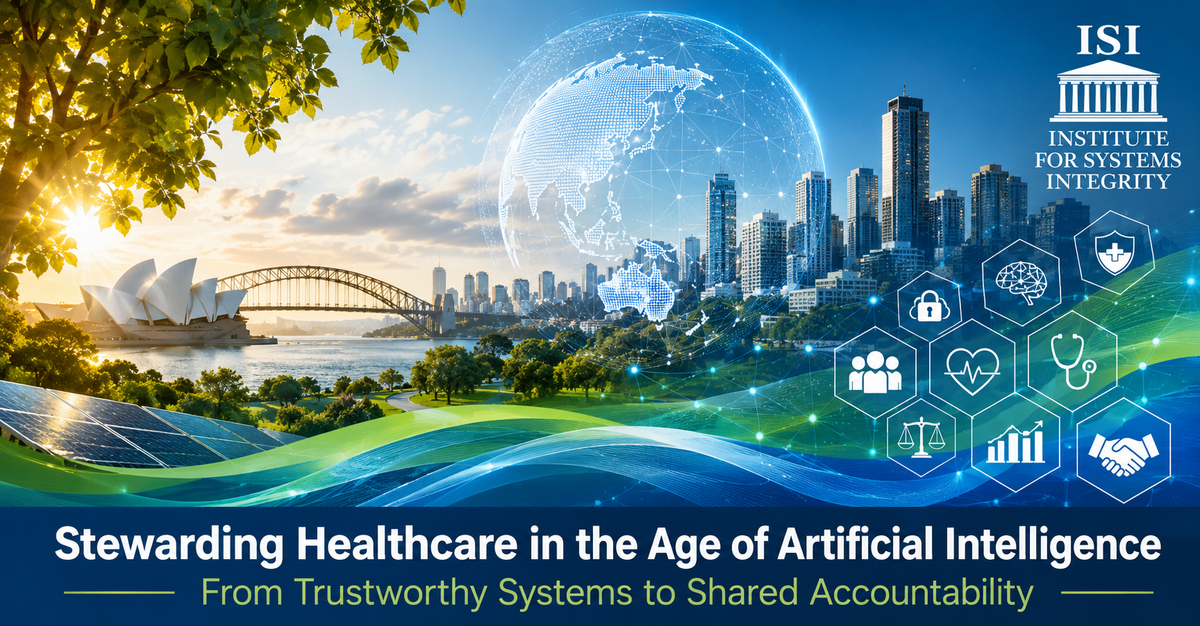
A HEALTHY PERSON CAN BECOME UNWELL IN AN UNHEALTHY SYSTEM : Why Workplace Harm Is Not A Wellbeing Problem : It Is A Governance Problem.
Most organisations respond to workplace harm by supporting the individual. While counselling, resilience training and wellbeing initiatives are important, they often address the consequences rather than the conditions creating the harm. This article argues that when capable people repeatedly become exhausted, psychologically injured or afraid to speak up, the underlying issue may not be individual resilience but organisational design. Drawing on governance, organisational psychology, psychosocial safety and healthcare systems thinking, the article reframes workplace harm as a governance issue—one that affects organisational learning, leadership, risk oversight and institutional performance. Ultimately, it argues that a healthy person can become unwell in an unhealthy system, and that the most important patient may sometimes be the organisation itself.
 Institute for Systems Integrity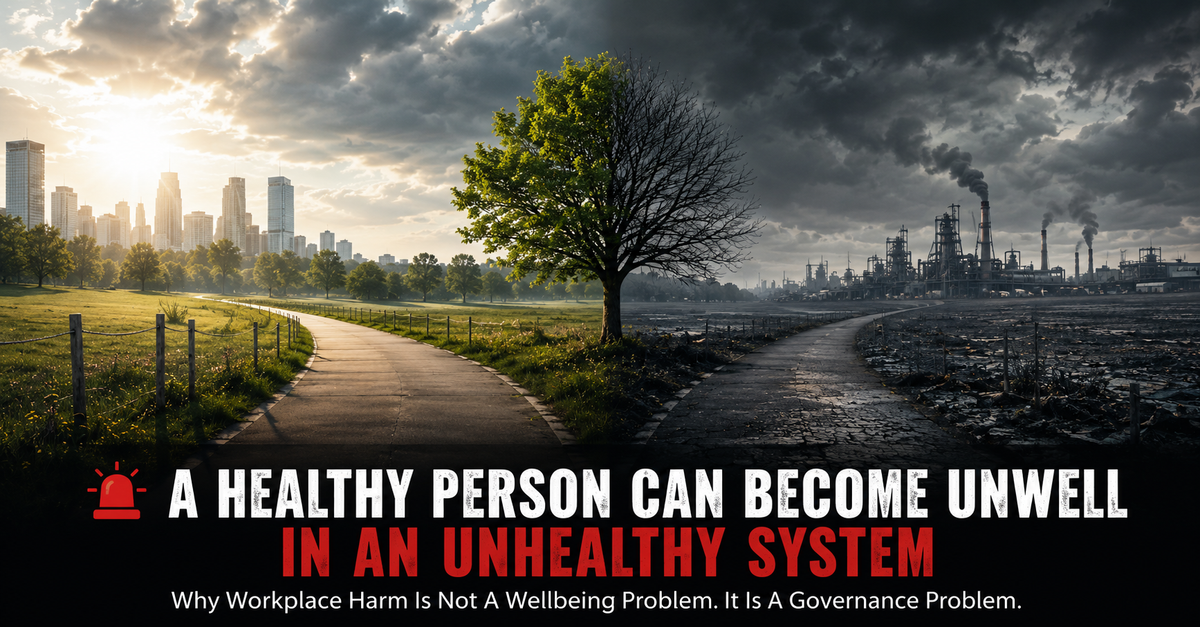
Nursing Is Not Just Labour. It Is Operational Intelligence : Why healthcare systems may be underestimating one of their most important sources of operational truth
Modern healthcare systems generate more data than ever before, yet many of the earliest signs of operational risk still emerge at the bedside. This article argues that nursing should be recognised not simply as workforce capacity, but as one of healthcare's most important sources of operational intelligence—revealing how frontline insight, if captured and acted upon, can strengthen governance, improve patient safety and help organisations see problems long before dashboards do.
 Institute for Systems Integrity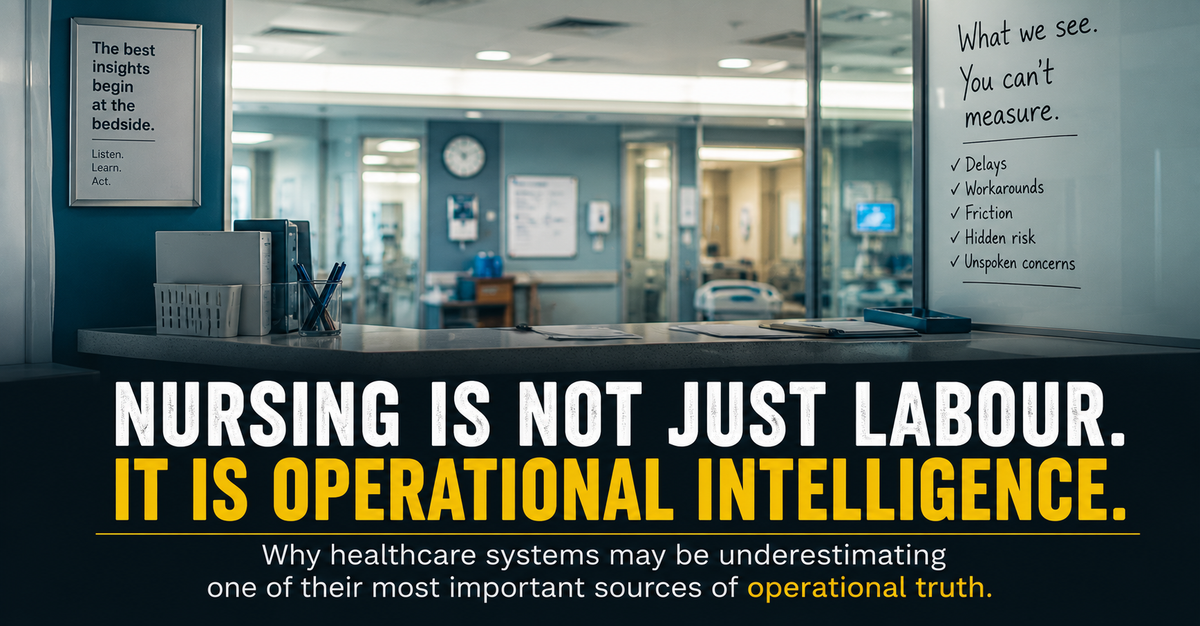
THE TRANSFORMATION DELUSION : Why Most Change Programs Fail Before They Begin
Modern healthcare systems invest heavily in dashboards, analytics, artificial intelligence and executive reporting to improve operational performance. Yet many of the earliest signals of emerging risk continue to originate far closer to the bedside than the boardroom. This article argues that nursing should no longer be viewed primarily as labour or workforce capacity. Instead, nursing should be recognised as one of healthcare's most important sources of operational intelligence—continuously detecting weak signals, preserving continuity, coordinating complex systems and revealing operational truth long before it appears in formal metrics. Drawing on systems thinking, operations management and contemporary healthcare governance, the article challenges leaders to reconsider whether their greatest intelligence asset has been present all along, simply overlooked.
 Institute for Systems Integrity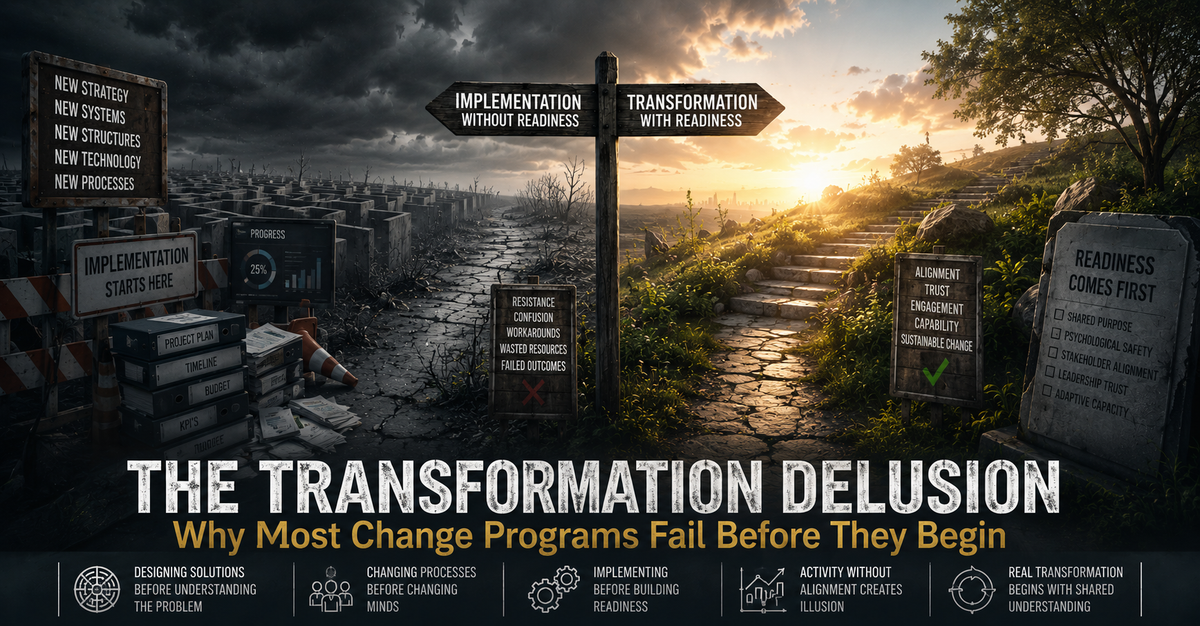
THE MOST IMPORTANT THING YOUR ORGANISATION DISTRIBUTES IS NOT MONEY :
IT IS ADVANTAGE.
Most discussions about inequality focus on money. Yet organisations distribute far more than financial rewards. Every day they distribute opportunity, visibility, influence, credibility and access. Over time, these invisible forms of advantage compound into power. This article explores why inequality often begins long before the pay gap appears and why the distribution of opportunity may be one of the most overlooked governance challenges facing organisations today.
 Institute for Systems Integrity
THE KNOWLEDGE CONTAMINATION CRISIS : Why Governance Systems Were Never Designed for AI-Generated Truth
Artificial intelligence is transforming healthcare, but the greatest risk may not be the technology itself. In this article, Dr Alwin Tan explores how fabricated references, contaminated evidence, and AI-assisted knowledge production could create a new category of patient safety risk. As healthcare becomes increasingly dependent on AI-generated insights, the challenge may no longer be governing machines—it may be preserving the integrity of the evidence upon which medicine depends. This article examines why evidence contamination could become one of the defining governance and patient safety challenges of the next decade.
 Institute for Systems Integrity
THE MOST DANGEROUS ORGANISATIONS CANNOT TELL THE DIFFERENCE BETWEEN REALITY AND REPORTING : Why Crisis Readiness Is Really A Signal Integrity Problem
Most organisations assume their reporting systems accurately reflect reality. Yet history repeatedly shows that major organisational failures are often preceded by warnings, concerns and emerging risks that never reach decision-makers intact. In this article, the Institute for Systems Integrity introduces the concepts of Signal Integrity, The Reporting Reality Gap, and Reality Debt to explain why crises rarely emerge from a lack of information. Instead, they emerge when organisations become increasingly effective at reporting while progressively losing contact with reality itself.
 Institute for Systems Integrity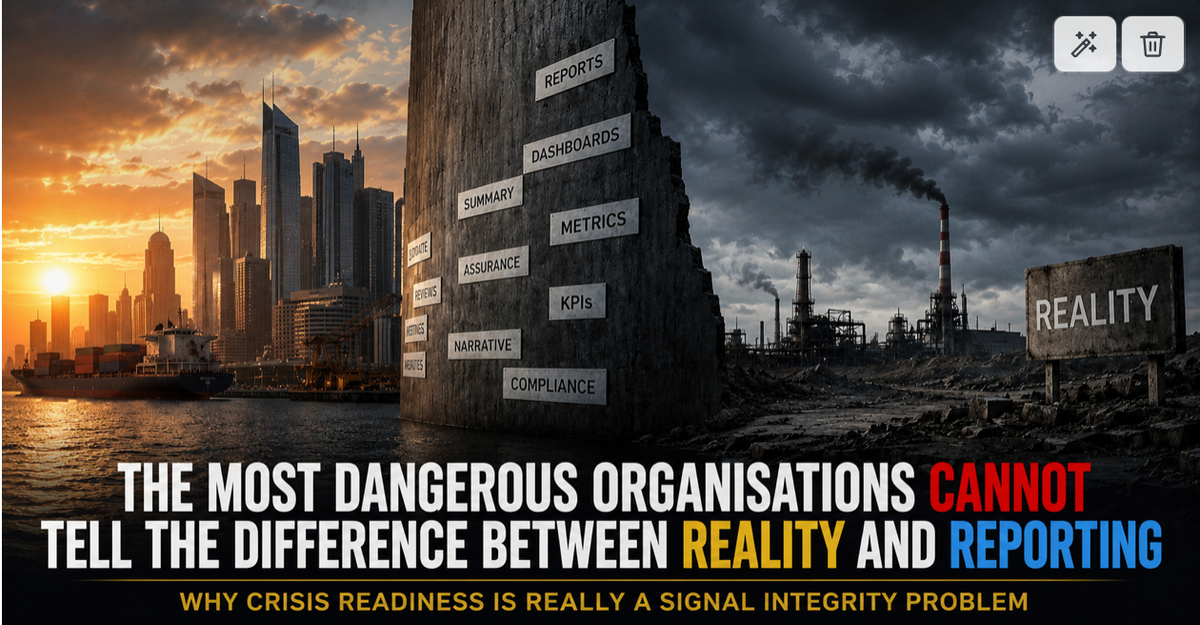
BOARDS DON'T GOVERN REALITY. : They govern what reality looks like after it has passed through the organisation.
Boards rarely fail because they receive too little information. They fail because operational reality changes before it reaches them. In this Institute for Systems Integrity paper, Dr Alwin Tan and Rosemary Boser introduce Information Fidelity as a governance capability: the extent to which operational reality remains faithfully represented as it moves from the frontline to the boardroom. Drawing on systems thinking, psychological safety, organisational silence, High Reliability Organisation theory and Just Culture, the paper argues that the next frontier of governance is not more dashboards, but the preservation of reality before it becomes reporting.
 Institute for Systems Integrity
🚨 FINANCIAL CAPITAL IS NOT ALLOCATED TO REALITY : IT IS ALLOCATED TO PERCEPTIONS OF REALITY : Why Signal Integrity May Determine the Success of the Sustainability Transition
Financial capital does not simply fund the sustainability transition. It shapes which futures become possible. This article explores why financial systems allocate capital not to reality itself, but to perceptions of reality created through disclosures, ratings, narratives, risk models and market signals. From a systems integrity perspective, sustainable finance is therefore not only an ESG issue. It is a signal integrity challenge. If markets cannot distinguish genuine impact from the appearance of impact, capital may flow toward narratives rather than transformation.
 Institute for Systems Integrity
👉 Prototype Failure: How Institutions Misjudge Leadership Capability
Prototype failure occurs when institutions mistake familiarity for capability. While organisations often believe they are selecting leaders based on merit, many leadership systems continue to reward those who most closely resemble historical leadership archetypes. The result is reduced cognitive diversity, weakened adaptability and increasing vulnerability during periods of disruption. This article explores why leadership recognition is fundamentally a governance challenge and why the future belongs to institutions capable of identifying adaptive intelligence before it becomes obvious.
 Institute for Systems Integrity
LEADERSHIP FAILURE IS OFTEN A ROLE FAILURE : Why Organisations Struggle When Leaders Bring the Wrong Leadership to the Wrong Level of the System
Most organisations assume leadership failure occurs when leaders lack capability. The evidence increasingly suggests something different. Many leadership failures emerge when highly capable individuals continue applying a leadership model that no longer matches the role they occupy. In this latest Institute for Systems Integrity paper, we introduce Leadership Fit Failure™ — a governance and systems-thinking perspective that explores how frontline leaders, executives and boards require fundamentally different forms of leadership. As organisational complexity increases, the ability to adapt leadership style to context may become one of the most important determinants of resilience, learning and long-term performance. This paper argues that leadership capability without leadership fit can become a hidden governance risk, and that the future belongs to leaders who can change shape faster than the systems they govern.
 Institute for Systems Integrity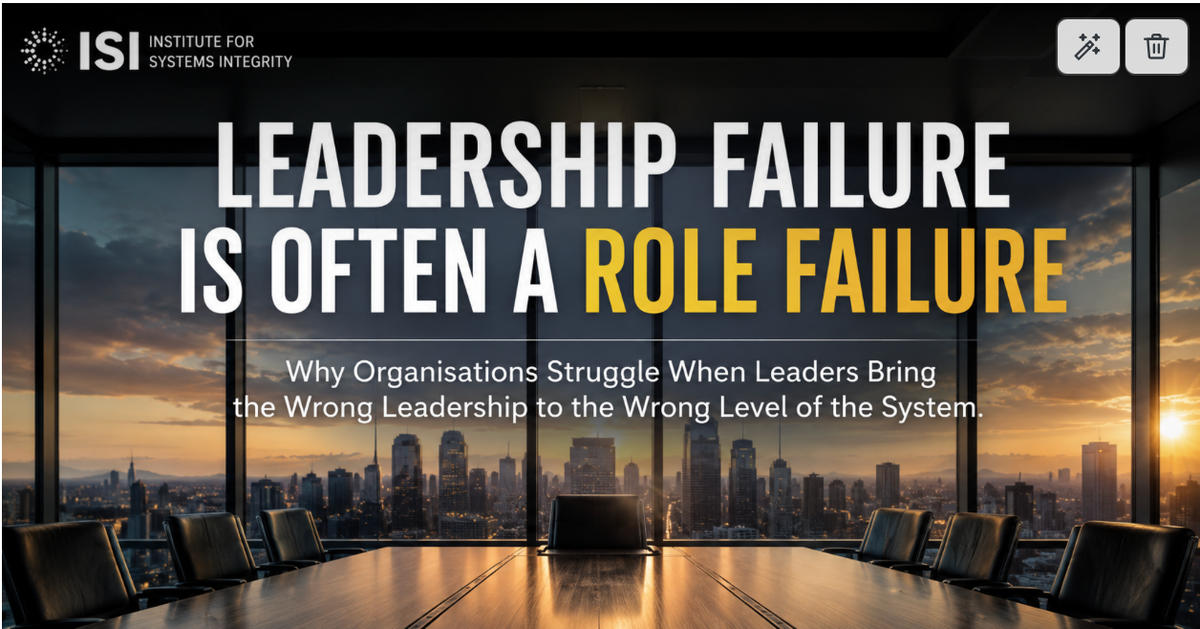
THE NEUROBIOLOGY OF ORGANISATIONAL SILENCE : Why Institutions Train People to Stop Telling the Truth
People do not stop speaking because they stop caring.
They stop speaking because organisations teach them that truth carries a cost.
In this paper, the Institute for Systems Integrity (ISI) explores how repeated suppression of concerns transforms silence from a choice into an adaptive response, weakening organisational learning, risk detection, and governance effectiveness. The result is a provocative new perspective on psychological safety, organisational truth systems, and why institutions often lose honesty before they lose control.
 Institute for Systems Integrity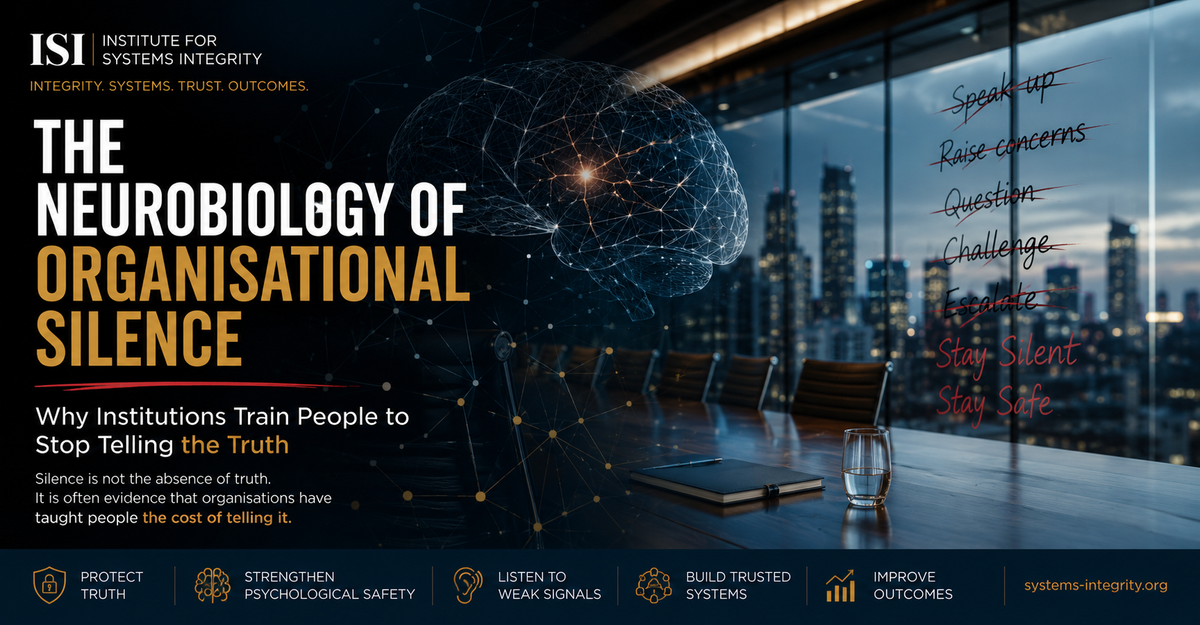
The Legitimacy Constraint Profit Is No Longer Enough — Organisations Now Need Permission to Exist
This article introduces what ISI considers a critical emerging governance concept:
The Legitimacy Constraint™
The point at which societal trust becomes the limiting factor on organisational freedom, regardless of financial performance, operational capability or market position.
Under the Legitimacy Constraint, institutions become increasingly restricted not because they lack resources, but because stakeholders no longer believe they deserve the authority, influence, tolerance or protection they once enjoyed.
This may become one of the defining governance risks of the AI era.
 Institute for Systems Integrity
THE SCALING TRAP : Why the Habits That Build Organisations Can Eventually Break Them
At the Institute for Systems Integrity, we are increasingly interested in what happens when systems evolve faster than the assumptions used to govern them. While entrepreneurial heroism is often celebrated as the engine of growth, the realities of scaling are more complex. This framework examines how success itself can become a masking force, how signal integrity deteriorates as organisations expand, and why resilience depends not on perpetual founder effort, but on designing systems capable of maintaining truth, coherence and adaptive capability under pressure. In an era defined by AI acceleration and escalating complexity, the ability to scale organisational integrity may become the most important competitive advantage of all.
 Institute for Systems Integrity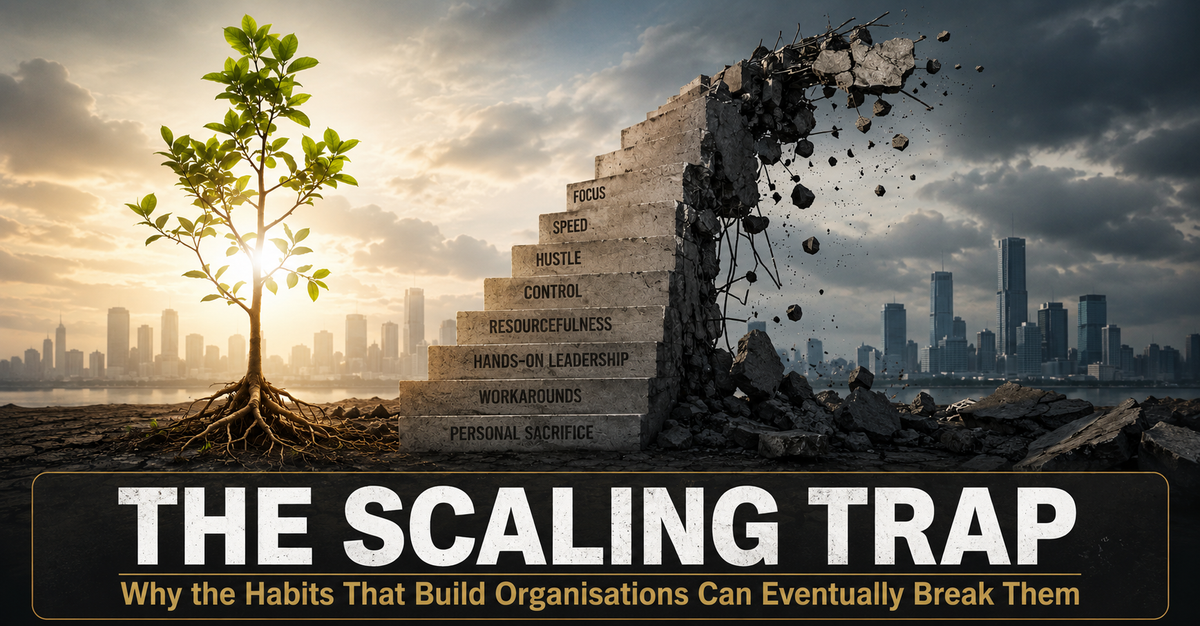
Near Misses Are Organisational Gold Why resilient institutions learn from what almost happened — not just what became catastrophic
Near misses are often treated as embarrassment, liability, or evidence of incompetence. Yet resilient institutions understand something profoundly different: almost-failures are among the most valuable forms of organisational intelligence available. This article argues that weak signals reveal stress before catastrophe emerges, and that institutions capable of surfacing uncomfortable truth early are better equipped to adapt, learn, and survive. Drawing on resilience engineering, organisational psychology, patient safety, and governance literature, it reframes near misses as strategic assets rather than reputational threats.
 Institute for Systems Integrity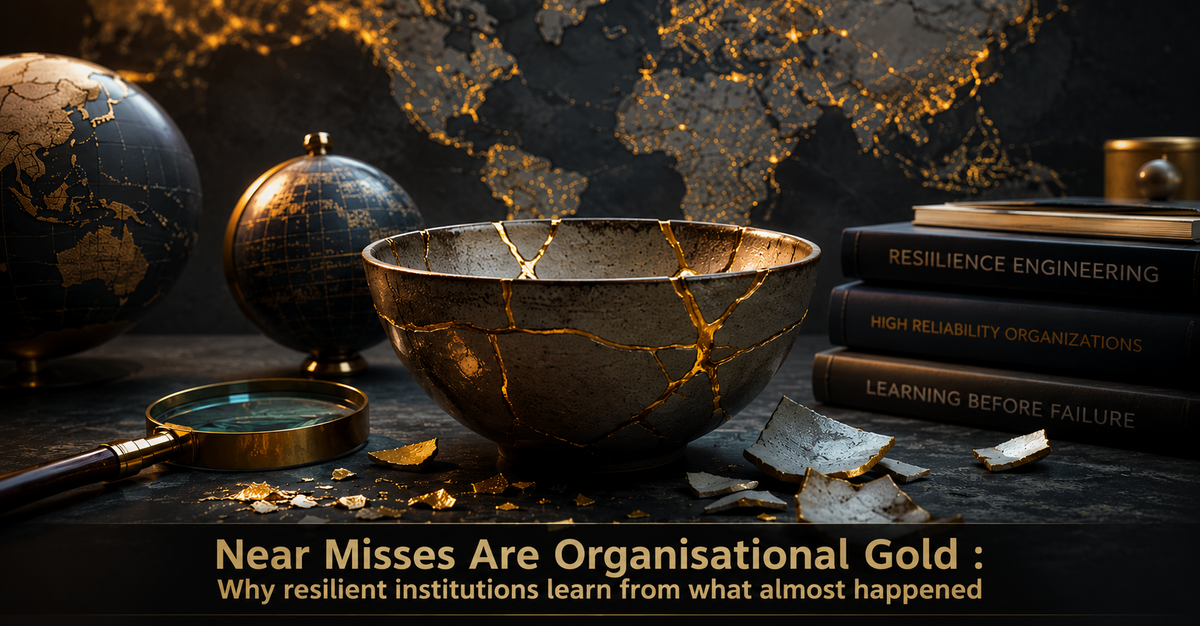
PARTNERSHIPS DON'T FAIL BECAUSE THE CONTRACTS ARE BAD :THEY FAIL BECAUSE THE TRANSLATION LAYER COLLAPSES.
Traditional governance approaches assume partnerships succeed when roles, contracts and accountability structures are clearly defined. Yet many high-profile failures emerge despite robust agreements and extensive oversight. ISI proposes that the true vulnerability lies within the "translation layer"—the dynamic process through which organisations interpret strategy, surface concerns, reconcile incentives and transmit reality across boundaries. When this layer deteriorates, signal integrity weakens, escalation slows and institutions become vulnerable to surprise. Effective governance therefore requires moving beyond transaction monitoring towards actively governing the quality of understanding, trust and truth flow between partners.
 Institute for Systems Integrity
The Most Dangerous Organisations Are the Ones Where Nobody Feels Safe Escalating Risk
At the Institute for Systems Integrity, we argue that the greatest governance failures rarely stem from a lack of intelligence, capability, or information. They emerge when institutions lose the ability to hear uncomfortable truths. This article explores how fear distorts signal flow, why psychologically edited realities develop inside successful organisations, and why the ability to escalate risk safely may be one of the most important indicators of institutional resilience.
 Institute for Systems Integrity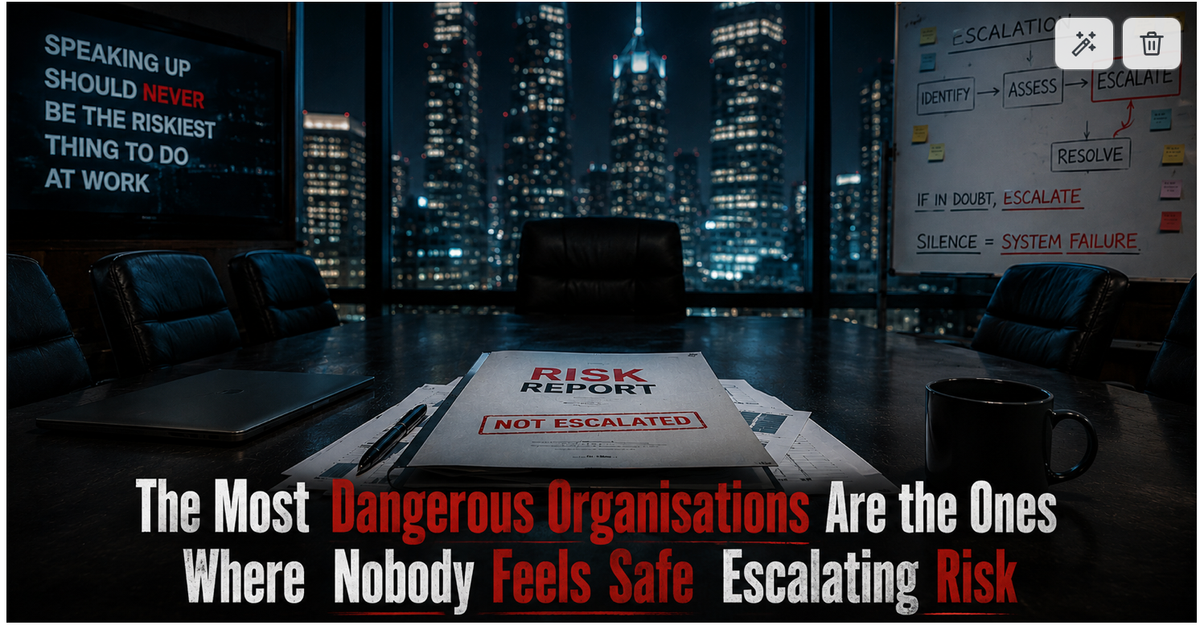
The Board’s Critical Role in Risk Governance: From Oversight to System Control Most Boards Are Looking at Risk the Wrong Way
Most boards believe risk governance is about oversight: approving risk appetite statements, reviewing dashboards, monitoring compliance, and receiving assurance reports. Yet history repeatedly shows that organisations rarely fail because risks were unknown. They fail because warning signals were ignored, filtered, normalised, or acted upon too late. This article argues that risk governance is not fundamentally a reporting function but a system-control function. The board's true responsibility is to ensure risk remains visible, escalation remains possible, and action occurs before harm materialises. In an era of increasing complexity, effective governance depends less on what boards are told and more on whether organisations can still recognise and respond to reality.
 Institute for Systems Integrity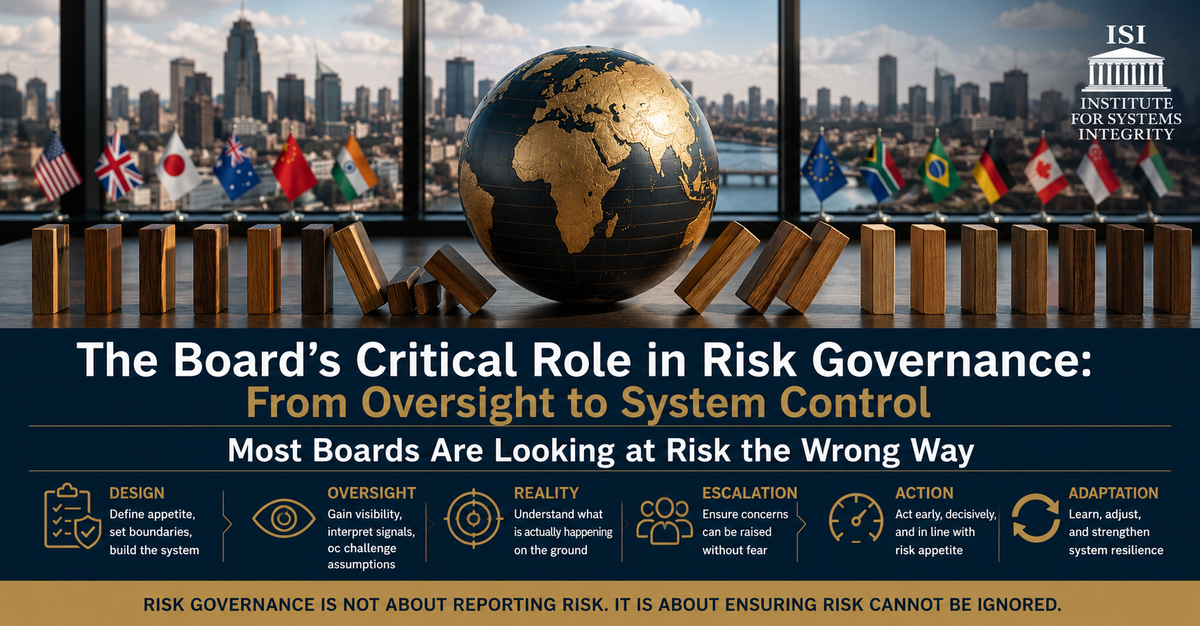
The World We Navigate Through: Misinformation, Disinformation, and the Collapse of Shared Reality
At the Institute for Systems Integrity (ISI), we believe the greatest information challenge of the digital age is not merely the spread of false information, but the gradual erosion of the shared reality upon which societies, institutions, and decision systems depend. Misinformation, disinformation, and increasingly sophisticated synthetic media are transforming how people interpret evidence, establish trust, and make decisions. This paper explores the systemic drivers behind information disorder and argues that preserving information integrity has become a critical governance priority for organisations, governments, healthcare systems, and democratic institutions alike.
 Institute for Systems Integrity
The Most Dangerous Organisations Are Becoming Humanly Hollow : Why Relational Atrophy May Be the Next Great Governance Failure
As organisations race to adopt AI, automation and digital transformation, an overlooked governance risk is emerging beneath the surface: relational atrophy. The gradual erosion of trust, listening, psychological safety and human connection can degrade signal quality long before traditional metrics detect a problem. This Institute for Systems Integrity paper argues that human relationships are not merely cultural assets—they are critical governance infrastructure. When organisations lose the ability to hear, challenge and connect honestly, they risk becoming operationally sophisticated yet humanly hollow.
 Institute for Systems Integrity
Decision Integrity as a Governance Control System : Why boards must govern for signal quality — not just decision outcomes
Boards rarely fail because they lack information. More often, they fail because the information reaching the board no longer reflects reality. In this paper, the Institute for Systems Integrity explores the concept of Decision Integrity and argues that effective governance depends not only on compliance, oversight, and reporting, but on the quality of signals, escalation pathways, and decision processes that shape board judgement. As organisations face increasing complexity, uncertainty, and scrutiny, the ability to distinguish reality from reassurance may be one of the most important governance capabilities of all.
Institute for Systems Integrity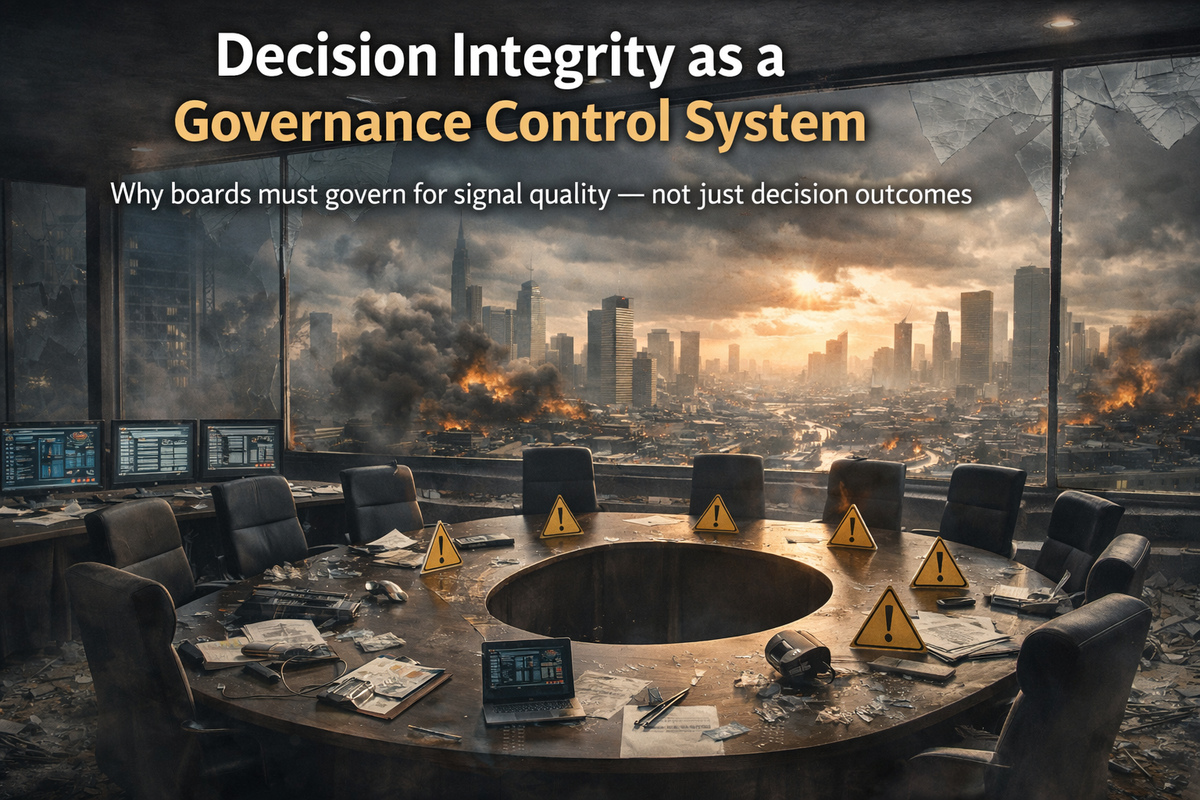
The Hourglass Organisation Why AI Will Not Flatten Healthcare — It Will Hollow It Out
As artificial intelligence reshapes healthcare, most leaders assume organisations will become flatter, leaner, and more efficient. This paper argues the opposite. Rather than removing complexity, AI may hollow out the operational middle layer responsible for translating frontline reality into executive understanding. The result is the emergence of the Hourglass Organisation: a small strategic leadership layer, a compressed coordination layer, and a large frontline workforce carrying increasing operational complexity. The greatest risk is not workforce reduction or automation itself, but the loss of truth transmission — the organisational capability that allows weak signals, emerging risks, and operational reality to travel accurately from the bedside to the boardroom. For boards, executives, and healthcare leaders, the challenge is no longer simply how to deploy AI, but how to preserve signal integrity, human judgement, and organisational visibility in an increasingly algorithmic world.
Institute for Systems Integrity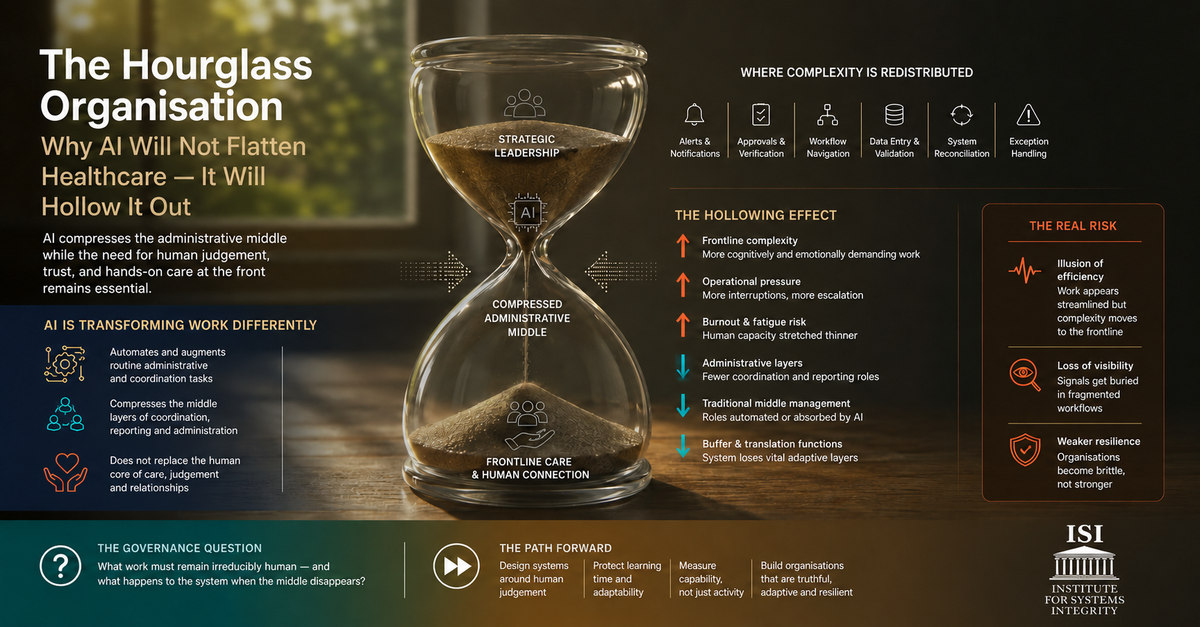
The Learning Collapse in Healthcare : Why Organisations Become Less Intelligent Under Pressure
Healthcare systems do not usually fail because people stop caring. They fail because organisations quietly lose their ability to learn under pressure. As operational stress rises, psychological safety weakens, escalation becomes harder, and frontline reality becomes increasingly filtered before reaching leadership. The result is a dangerous form of governance blindness: healthcare systems that continue appearing operationally successful while becoming progressively less adaptive, less self-aware, and less capable of detecting emerging risk. This article explores the phenomenon of “learning collapse” in healthcare — and why the ability to learn under pressure may now be one of the most important determinants of organisational safety and resilience.
Institute for Systems Integrity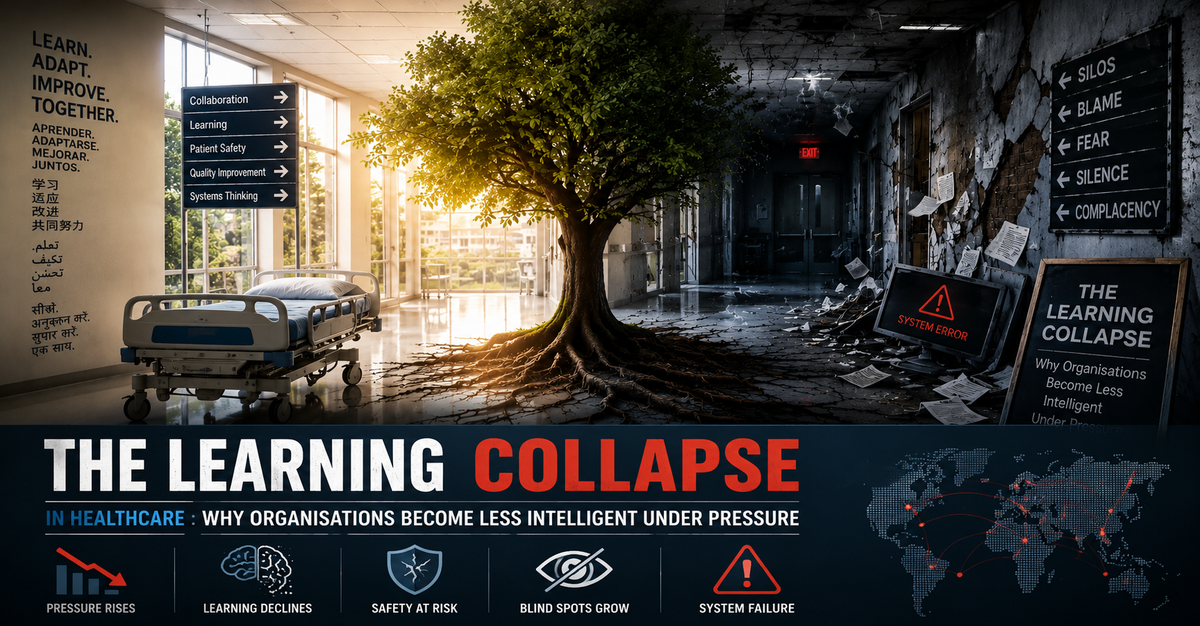
Compliance as a Truth System : Why boards must govern for signal integrity — not just rule adherence
This article argues that most governance failures do not begin with missing policies, but when organisations stop surfacing uncomfortable truths upward. As signals become softened, filtered, delayed, or normalised under operational pressure, boards may continue receiving reassurance while the system underneath quietly drifts away from reality. This paper reframes compliance not as a documentation exercise, but as a critical organisational sensing capability essential to governance, safety, and long-term system integrity.
Institute for Systems Integrity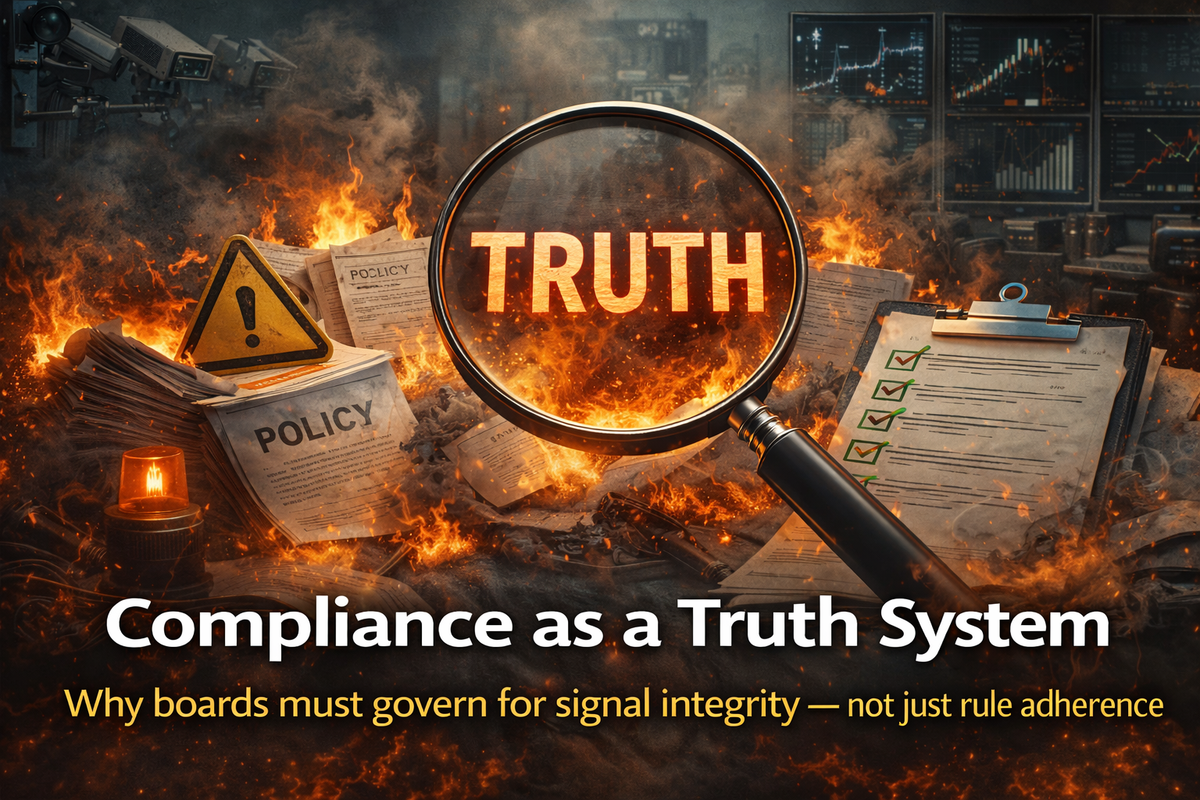
Gaslighting as a Governance Failure in Healthcare
Healthcare systems rely on the accurate flow of truth signals to maintain safe care. Yet under operational, reputational, and legal pressure, organisations can begin suppressing or reframing uncomfortable information rather than correcting it. In this new paper, this article examines gaslighting not as an interpersonal issue, but as a governance failure mode that disrupts organisational control loops, suppresses learning, and increases patient-safety risk. Drawing on governance theory, patient safety literature, and system-stress analysis, the paper explores how healthcare institutions can unintentionally train silence into the system — and what boards and leaders must do to restore integrity.
Institute for Systems Integrity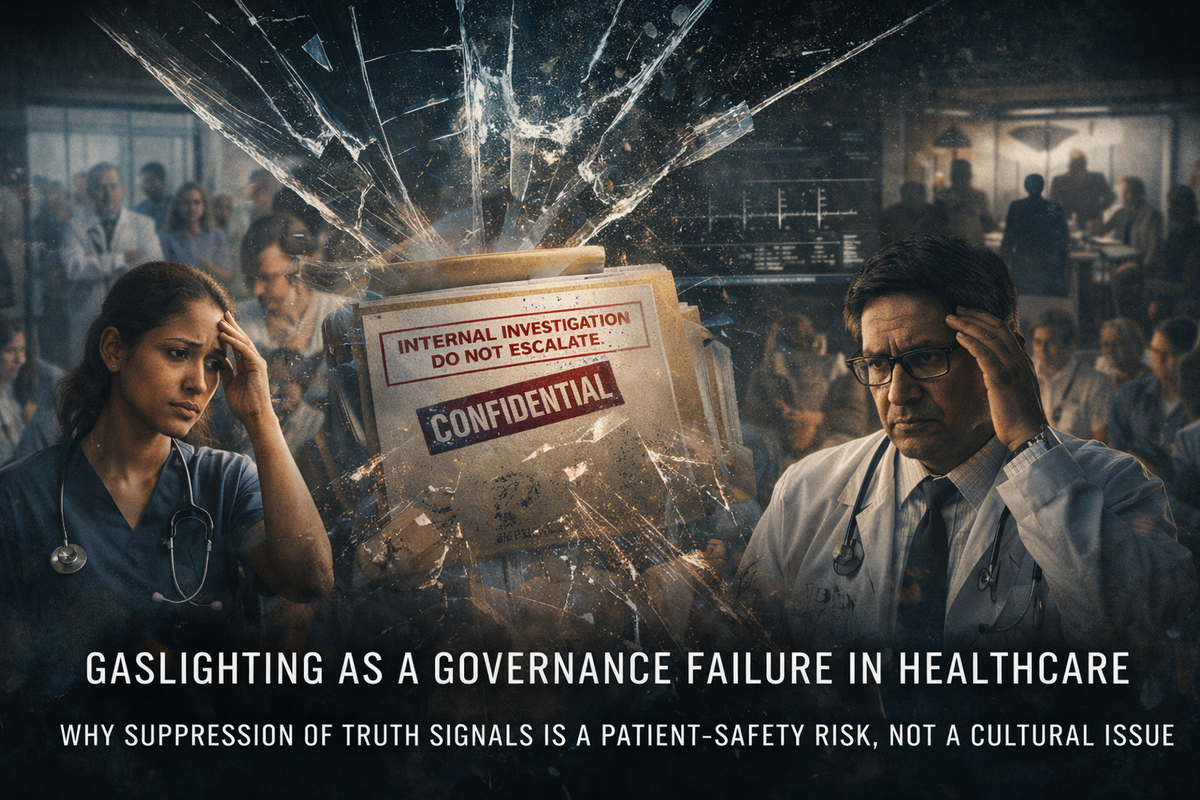
Dual-Culture Organisations : How protected executive cultures distort governance, escalation, and organisational truth
Some organisations do not fail because they lack values, policies or governance frameworks. They fail because a second culture develops behind closed doors — one where difficult truths become politically unsafe, accountability becomes selective and escalation is filtered before it reaches decision-makers. This ISI paper examines dual-culture organisations as a systems-governance risk, showing how protected executive cultures distort signal integrity, weaken psychological safety and leave boards governing a curated version of reality rather than the organisation itself.
 Institute for Systems Integrity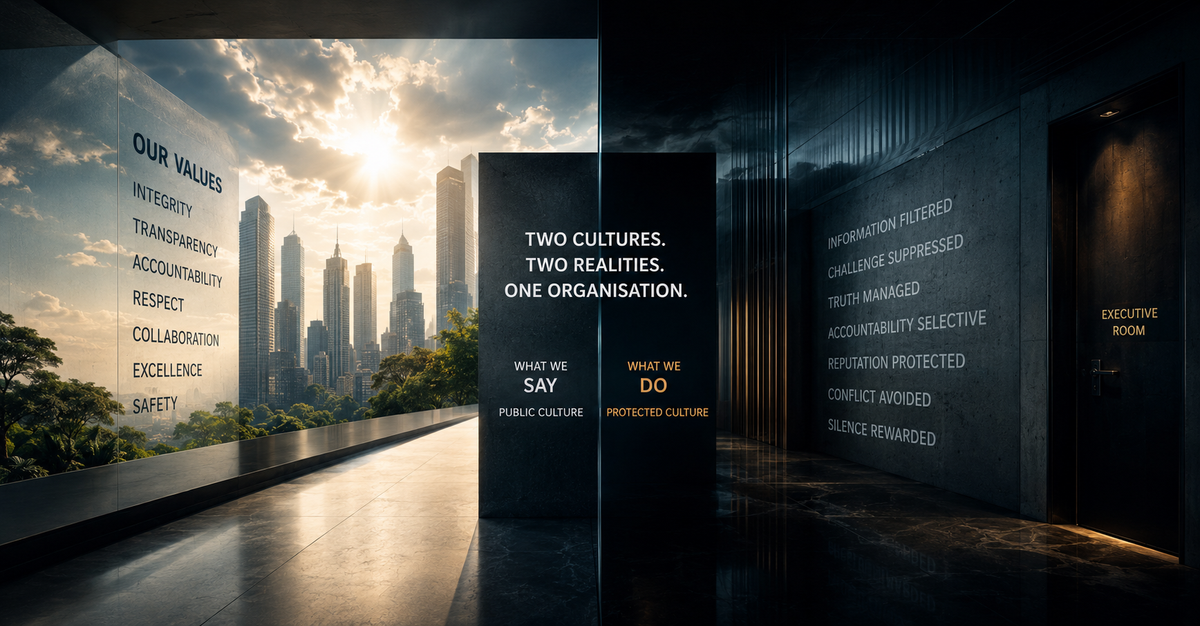
Social Purpose Is a Governance Test — Not a Statement : Why Boards That ‘Believe in Purpose’ Still Fail to Deliver It
Modern organisations increasingly speak the language of purpose, values, and stakeholder responsibility — yet many still struggle to align their systems with the outcomes they publicly claim to support. In this latest paper, the Institute for Systems Integrity (ISI) examines one of the emerging governance challenges of our time: the growing gap between declared organisational purpose and operational reality. The paper argues that social purpose is no longer simply a reputational narrative or branding exercise. It is becoming a governance test — requiring boards to govern incentives, culture, decision-making, accountability, and system behaviour with far greater discipline under pressure. At its core, the paper introduces a central ISI position: 👉 purpose is not what organisations say. It is what their systems consistently produce.
 Institute for Systems Integrity
Distance Distorts Signal in AI-Assisted Triage : Why Governance Fails Before the Algorithm Does
AI-assisted triage is increasingly being deployed across healthcare systems as hospitals seek faster patient flow, improved efficiency, and reduced operational pressure. But while much of the public discussion focuses on model accuracy and technical capability, a deeper governance risk is emerging beneath the surface. In this paper, the Institute for Systems Integrity (ISI) examines how signal distortion, hidden error accumulation, workflow workarounds, algorithmic drift, and leadership distance from frontline clinical reality can create dangerous blind spots in AI-assisted triage systems. The paper argues that many governance failures occur not because organisations lack data, but because operational truth becomes progressively softened, filtered, or lost as it travels upward through complex systems.
 Institute for Systems Integrity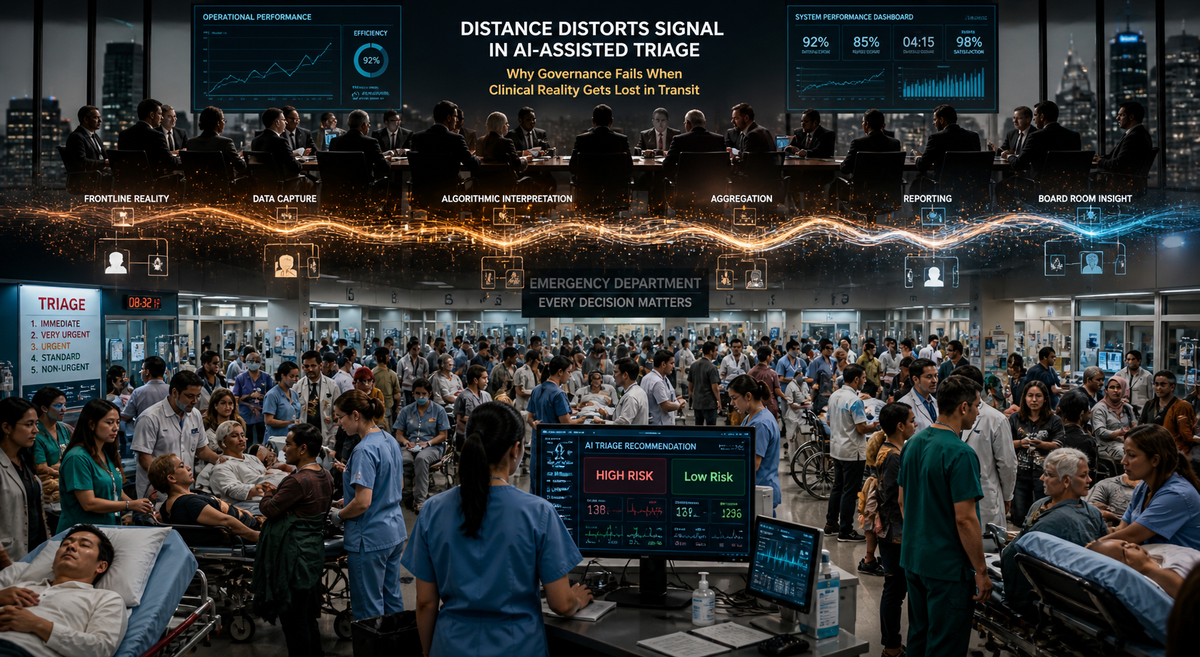
How Boards Set Good Culture — Including the Risks of Tribalism and Bias : Culture as a control system for truth, behaviour, and risk
Culture is often treated as a soft organisational concept. This article reframes culture as a governance control system — one that determines whether truth moves, risk is surfaced, and behaviour aligns with intent. It examines how boards shape culture through five governance levers, and why tribalism, hierarchy and bias can distort the signals boards rely on.
Institute for Systems Integrity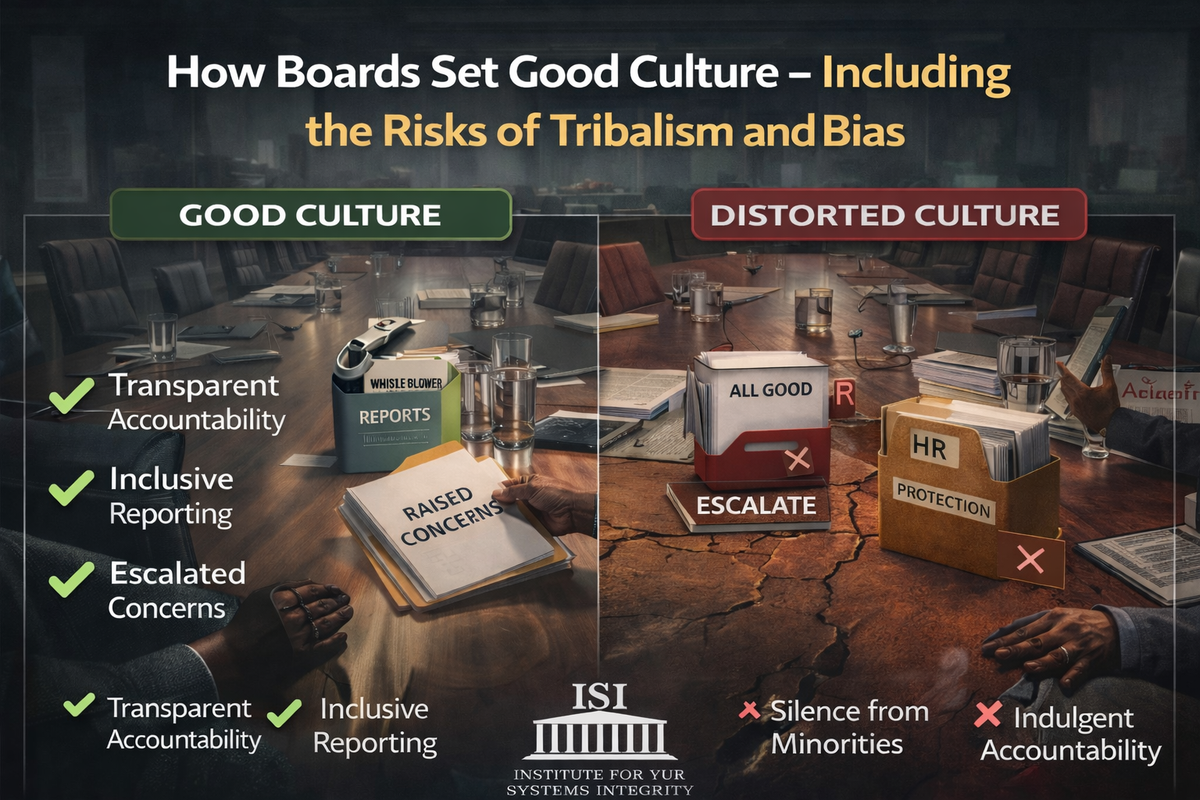
From Human-in-the-Loop to Human-with-Agency : Why AI Oversight Fails When Humans Are Present but Powerless
Artificial intelligence is rapidly entering healthcare, governance, operations, and critical infrastructure. Yet many organisations still mistake human presence for meaningful oversight. In this paper, the Institute for Systems Integrity introduces the Human Agency Framework — a governance model examining the difference between symbolic human involvement and protected human judgement under pressure. The paper argues that AI oversight fails not when humans are absent, but when they are present without the authority, information, or organisational support to intervene when it matters most.
Institute for Systems Integrity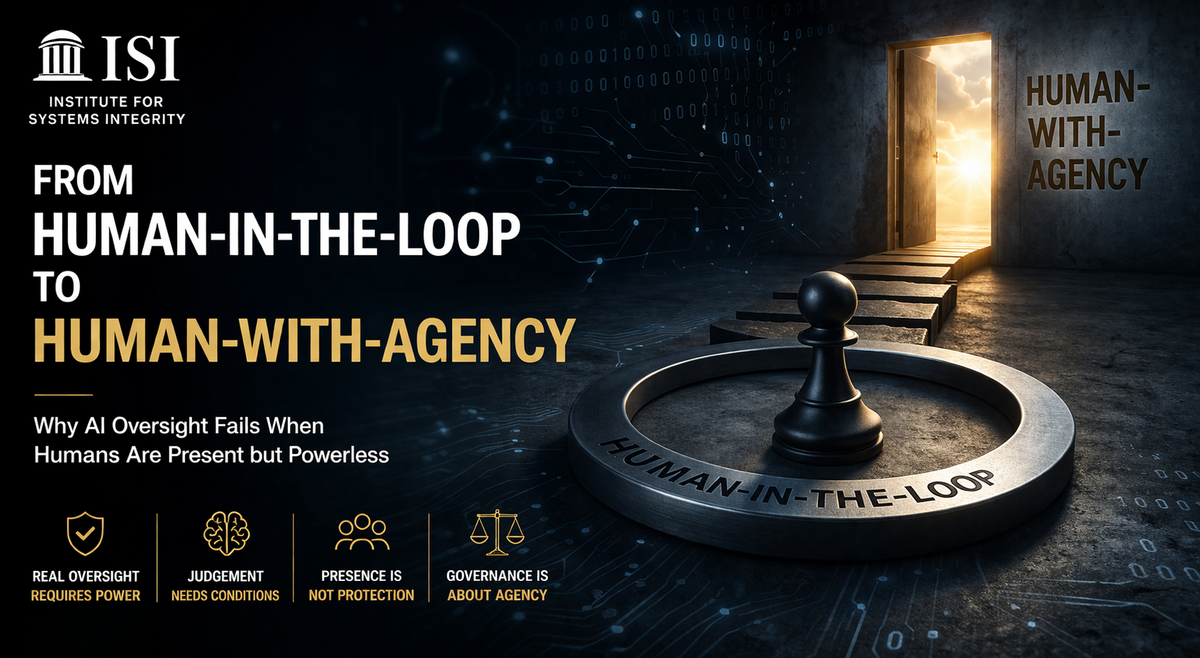
Employee Assistance Programmes and the Illusion of Care : Why Underutilisation Is a System Signal, Not a Workforce Failure
Employee Assistance Programmes are often positioned as evidence of organisational care. Yet across industries, utilisation remains consistently low. This paper challenges the assumption that underuse reflects employee reluctance, arguing instead that it signals a deeper systems issue. When organisations address distress downstream—through support services—while leaving upstream drivers such as workload, culture, and leadership unchanged, a gap emerges between stated intent and lived experience. This paper reframes EAPs not as solutions, but as diagnostic indicators of system strain, and explores the governance implications of mistaking availability of support for presence of care.
Institute for Systems Integrity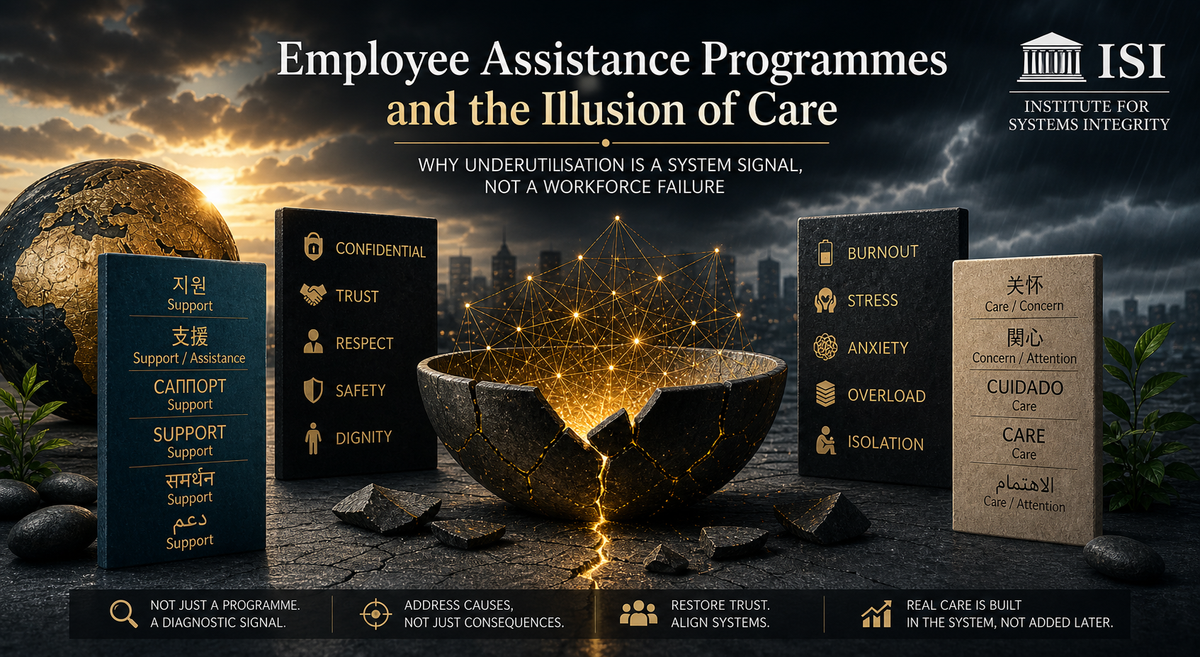
The Capability Trap in Healthcare Why Systems Get Worse While Everyone Works Harder
Healthcare systems rarely fail from a lack of effort. More often, they fail because effort is used to compensate for flawed system design. In The Capability Trap in Healthcare, the Institute for Systems Integrity (ISI) examines how organisations respond to performance pressure by increasing workload, targets, and urgency—while unintentionally eroding the very capability required to improve. This paper reframes the capability trap as a governance risk: a reinforcing loop where short-term performance gains come at the cost of long-term system strength, learning, and resilience. For boards and leaders, the challenge is not to drive more effort, but to recognise when effort has become a substitute for design—and to intervene before decline is locked in.
Institute for Systems Integrity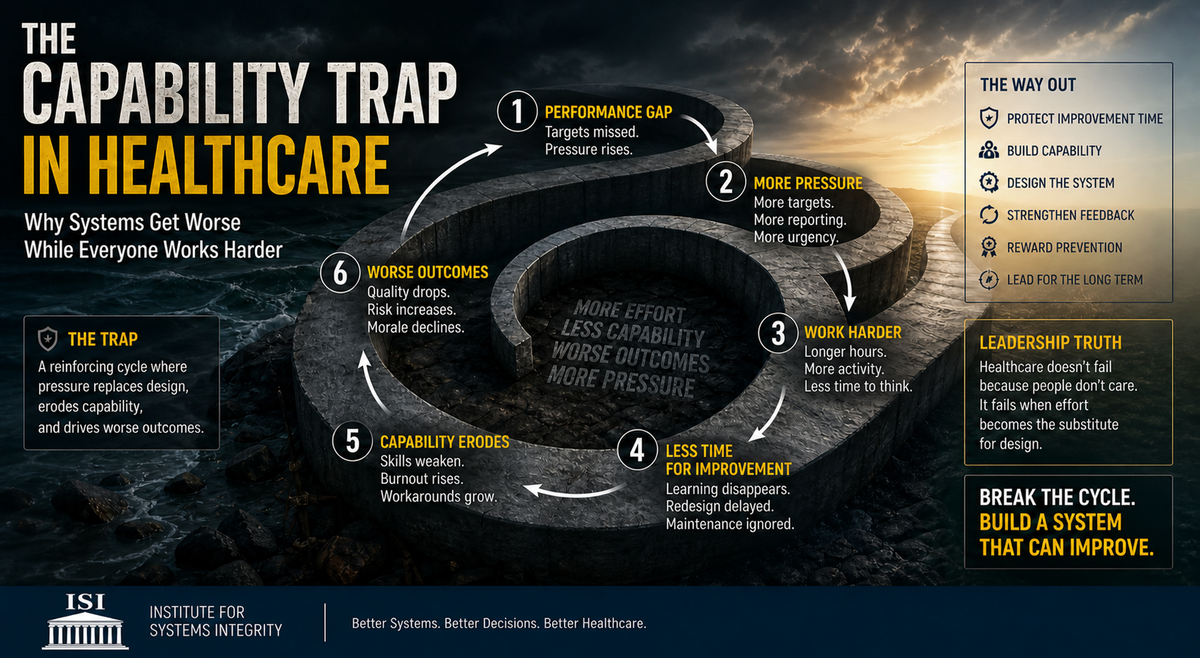
From Pitch Deck to Reality: Where Startup Systems Break When Growth Begins
Startups are often judged by the strength of their ideas. In practice, they succeed or fail based on the strength of their systems. This paper examines a critical transition point in venture development—the shift from narrative to execution—where assumptions are tested against operational reality. Drawing on governance, entrepreneurship, and real-world scaling dynamics, the Institute for Systems Integrity (ISI) explores how signal distortion, supply chain constraints, and incentive misalignment emerge as growth accelerates. The result is a clear insight: failure is rarely sudden. It is the cumulative consequence of systems that lose the ability to see and respond to truth. This paper introduces a practical framework for preserving system integrity as startups scale, ensuring that speed is matched with accountability, visibility, and disciplined execution.
Institute for Systems Integrity
When Choice Disappears: Why Healthcare Exposes the Limits of Market Logic
Healthcare is frequently debated as an ideological contest between markets and government, yet the real test comes when people are vulnerable, frightened, and in urgent need of care. In those moments, the normal conditions that make markets function—time, information, bargaining power, and freedom to choose—often disappear. When Choice Disappears: Why Healthcare Exposes the Limits of Market Logic examines why healthcare cannot be understood as an ordinary consumer market, why most serious nations build protective guardrails, and how resilient systems combine innovation, competition, access, and human dignity through smarter governance and design.
Institute for Systems Integrity
From Externalities to Systemic Risk: How Sustainability Entered the Logic of Finance
For decades, environmental and social harms were treated as externalities—costs absorbed by communities, ecosystems, and future generations rather than reflected in markets. That era is ending. Climate disruption, governance failures, supply-chain fragility, labour instability, and transition risk are increasingly entering financial systems through asset pricing, lending decisions, insurance markets, and board oversight. This paper examines one of the defining governance shifts of our time: how sustainability moved from the language of responsibility into the logic of finance
Institute for Systems Integrity
Wearables Are Not Personal Devices: They Are Vulnerable Points Inside Critical Systems
Wearables are commonly viewed as personal devices — watches, trackers, glasses, and sensors used by individuals. But in connected healthcare and enterprise environments, they are something more consequential: vulnerable points inside larger systems. In this new paper, the Institute for Systems Integrity explores how always-on, human-attached devices create governance blind spots, behavioural intelligence risks, and new pathways of system exposure that most organisations have yet to properly recognise.
Institute for Systems Integrity
If the Right Clinician Is Not in the Room, Systems Drift: Clinical Signal, Governance Design, and the Risk of Functional Absence
Healthcare governance often assumes that clinical representation is enough. It isn’t. Many organisations have a clinician at the table, yet still make decisions detached from operational reality. The issue is not presence — it is whether the rightclinician perspective is meaningfully shaping judgement, risk calibration, and strategic choices. When authentic clinical signal is absent, governance does not pause; it continues with weaker visibility, reduced challenge, and rising drift. This article examines how symbolic representation, flawed governance design, and functional clinical absence can quietly erode decision quality across healthcare systems.
Institute for Systems Integrity
The Approval Illusion: Why Boards Must Govern AI as a Living Clinical Risk System — and Why Vendors Must Share the Burden of Harm
Most boards believe that approving artificial intelligence is an act of governance. It is not. It is the point at which risk enters the system. In healthcare, AI does not behave like a static tool but as a dynamic, context-dependent influence on clinical decision-making — capable of drift, degradation, and unintended consequence under real-world conditions. Yet governance models remain anchored in procurement logic, while accountability for failure sits with clinicians at the point of care. This paper examines the “approval illusion” — the structural gap between decision authority and risk exposure — and argues that boards must shift from approving technology to governing decision quality, with vendors sharing responsibility for the clinical risks their systems create.
Institute for Systems Integrity
The Strategy Governance System for AI in Healthcare: Why boards must govern decision quality — not just approve technology
Artificial intelligence is rapidly reshaping healthcare, but its risks are not primarily technical — they are systemic. This paper introduces the Strategy Governance System for AI in Healthcare, reframing governance as a continuous process that extends beyond approval into decision quality, signal integrity, and adaptive oversight. It argues that boards do not manage AI risk by reviewing dashboards or endorsing strategy alone, but by governing how decisions are formed, tested, executed, and monitored over time. In doing so, it highlights a critical shift: from overseeing technology to safeguarding the integrity of the systems in which that technology operates.
 Institute for Systems Integrity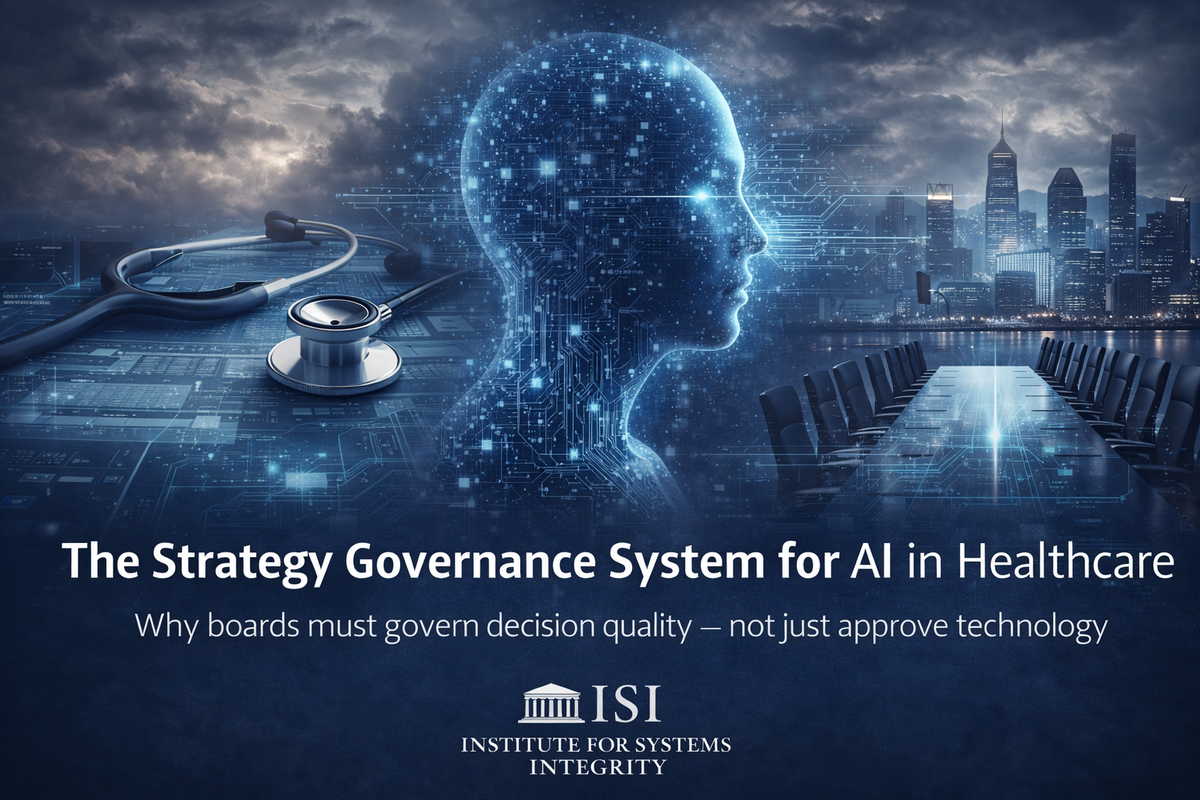
Micromanagement as a Governance Failure Mode : Why control concentrates risk instead of reducing it
Micromanagement is often seen as a leadership problem. This paper reframes it as a governance failure mode. When decision-making concentrates at the top, organisations lose capability, slow down under pressure, and become structurally fragile. This ISI paper examines how control, when misapplied, undermines system integrity.
 Institute for Systems Integrity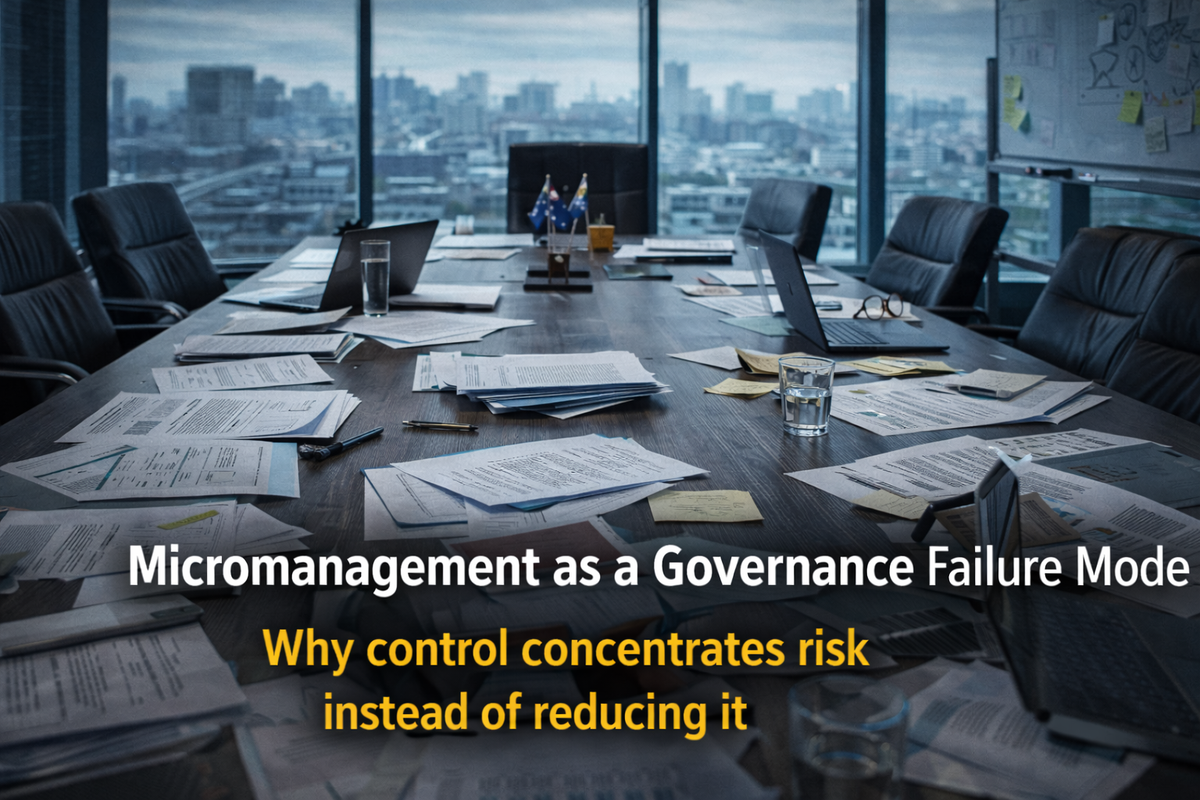
Walking the Floor as a Governance Mechanism
Most governance systems rely on what is reported—dashboards, metrics, and formal updates. But risk does not begin in reports. It begins in conditions: how work is performed, how pressure is managed, and whether concerns are raised or absorbed. This paper examines how “walking the floor” can be understood not as leadership visibility, but as a governance sensing mechanism—one that improves signal integrity, strengthens cultural oversight, and enables earlier detection of system stress before it becomes visible in formal reporting.
 Institute for Systems Integrity
Absenteeism in Healthcare: From Workforce Symptom to System Signal
Absenteeism in healthcare is often viewed as a workforce issue requiring operational solutions. This paper reframes it as an early signal of system strain. When examined through a systems integrity lens, patterns of absence reveal deeper pressures in workload design, patient flow, organisational culture and leadership response. By shifting the focus from individual behaviour to system conditions, this analysis highlights why absenteeism matters not only for workforce sustainability, but for the integrity of clinical decision-making and the safety of care delivery.
 Institute for Systems Integrity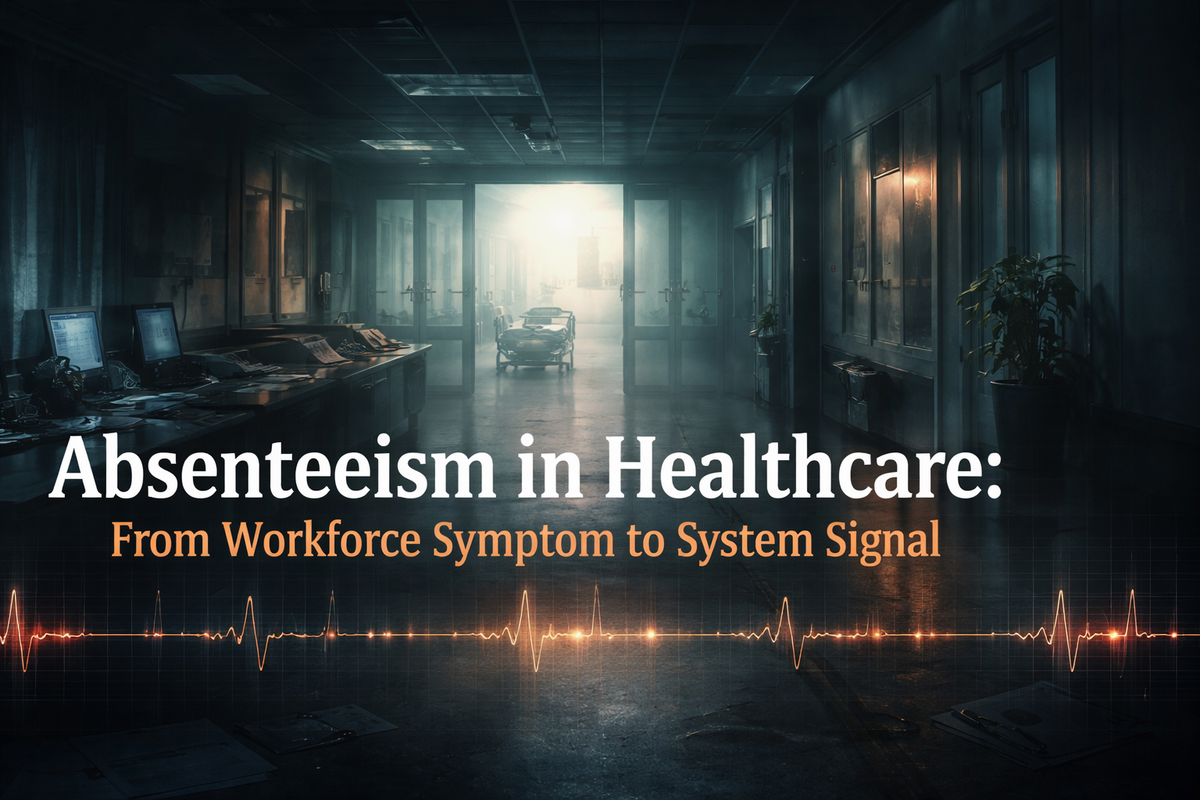
Access Without Interpretation: Why Australia’s Digital Health Reform Risks Distorting Clinical Decision-Making
Healthcare systems are undergoing a quiet but profound shift. As patients gain faster access to pathology and imaging results — often before clinician review — the traditional flow of clinical decision-making is being reconfigured. What appears as a transparency reform is, in reality, a structural change in how information moves, is interpreted, and ultimately acted upon. This article examines why access alone is not enough, and why the next frontier of healthcare governance lies in managing how meaning is constructed between data and decision.
 Institute for Systems Integrity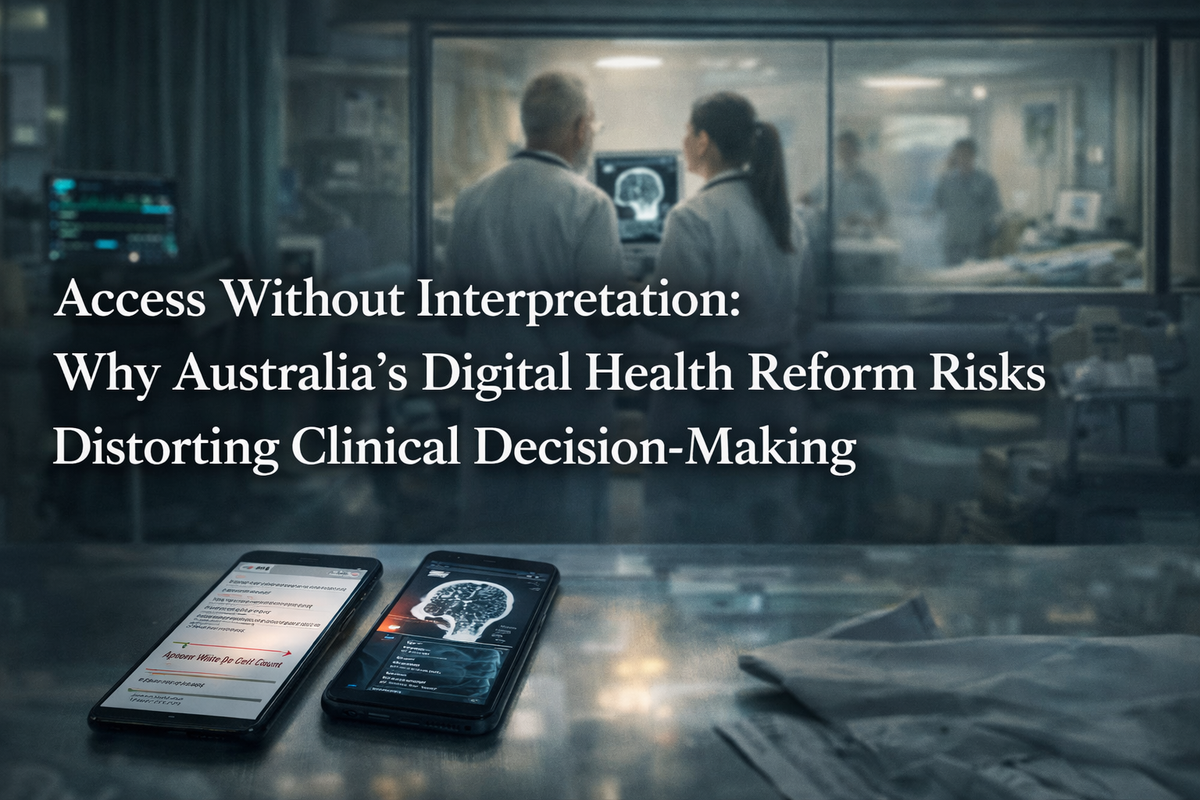
Constructive Scepticism as a Governance Control Function: Why boards must treat scepticism as a system requirement — not a personality trait
Constructive scepticism is widely described as a quality directors should bring to the boardroom. This paper reframes it as something more fundamental. It argues that scepticism is not simply a mindset, but a governance control function shaped by how information flows, how decisions are structured, and how oversight is exercised. When these conditions weaken, scepticism does not disappear — it becomes ineffective. Understanding this shift is critical to explaining why boards can remain compliant while gradually losing control under pressure.
 Institute for Systems Integrity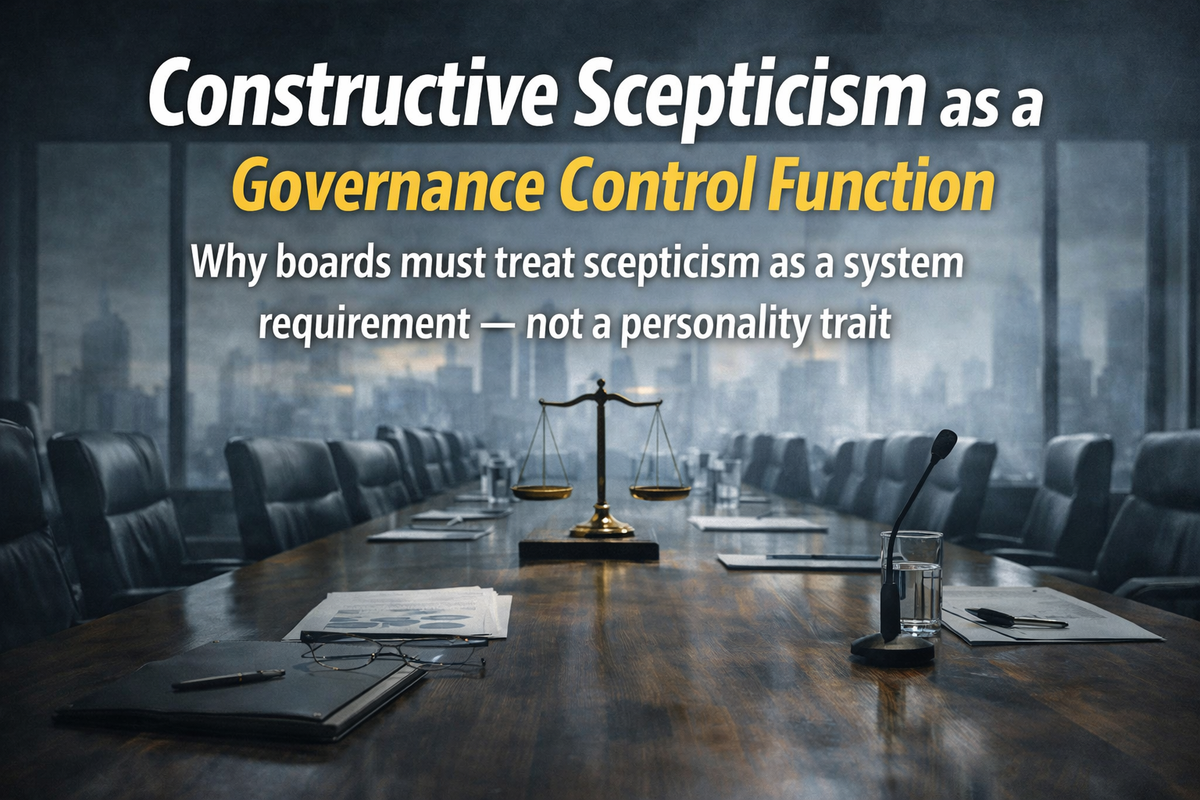
When Work Never Settles: A Governance Blind Spot Hiding in Plain Sight
Work does not feel endless because of the hours. It feels endless because it never settles.
In this paper, the Institute for Systems Integrity examines how modern work systems — defined by constant interruption, fragmented attention, and blurred boundaries — are not just productivity challenges, but governance risks. When work cannot stabilise, judgment compresses, visibility weakens, and decision quality degrades. This is not a failure of individuals. It is a failure of system design. This paper reframes the issue through a governance lens, outlining how organisations can move from interruption-driven activity to systems that protect thinking, preserve judgment, and enable sustainable performance.
 Institute for Systems Integrity
Shock-Resilient Entrepreneurship: A Systems Integrity Playbook for Small Business in an Era of Global Disruption
In an era defined by geopolitical instability, energy volatility, and cascading economic shocks, small businesses are increasingly operating on the edge of uncertainty. Shock-Resilient Entrepreneurship reframes crisis not as an isolated event, but as a systemic stress test—one that exposes hidden dependencies, weak signals, and fragile decision structures. This ISI playbook brings together evidence, strategy, and systems thinking to help entrepreneurs move beyond reactive survival, and instead build organisations that can absorb disruption, adapt with clarity, and sustain performance under pressure.
 Institute for Systems Integrity
AI Managers vs People Managers: Governance Lessons from Human and Machine Failure Modes
As artificial intelligence shifts from experimentation into operational reality, organisations are confronting a new governance challenge: they are no longer managing only people, but also autonomous systems with fundamentally different behaviours and risks. This article examines why managing humans and managing AI require distinct control systems—and what boards must now oversee to ensure safety, reliability, and accountability.
 Institute for Systems Integrity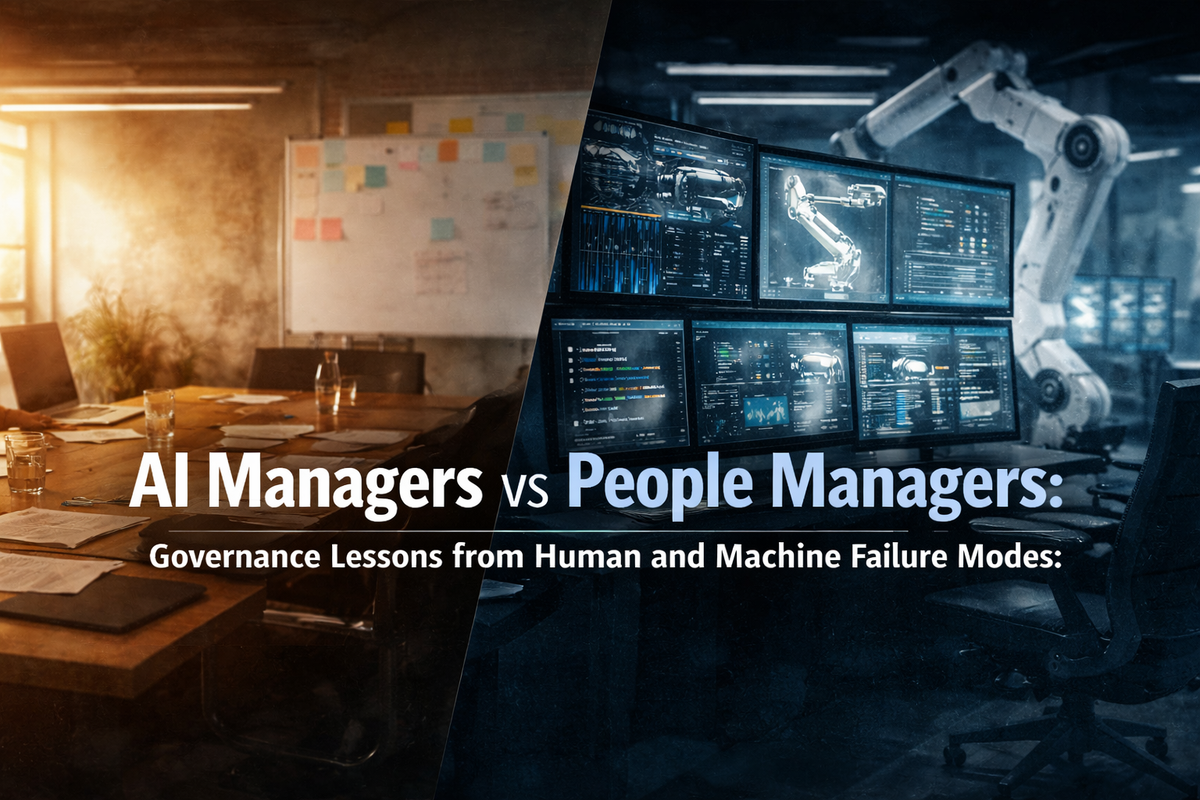
Tone at the Top, Drift in the System: Why ethical drift begins when leadership signals are inconsistent, tolerated, or ignored
Most organisations don’t fail because of a single unethical decision—they drift. Tone at the Top, Drift in the System examines how culture is shaped not by stated values, but by the signals leaders send through what they reward, ignore, and tolerate. Drawing on governance research and real-world patterns, this article explores how small inconsistencies accumulate into systemic risk, and why boards must look beyond frameworks to the behaviours that are quietly allowed to continue.
 Institute for Systems Integrity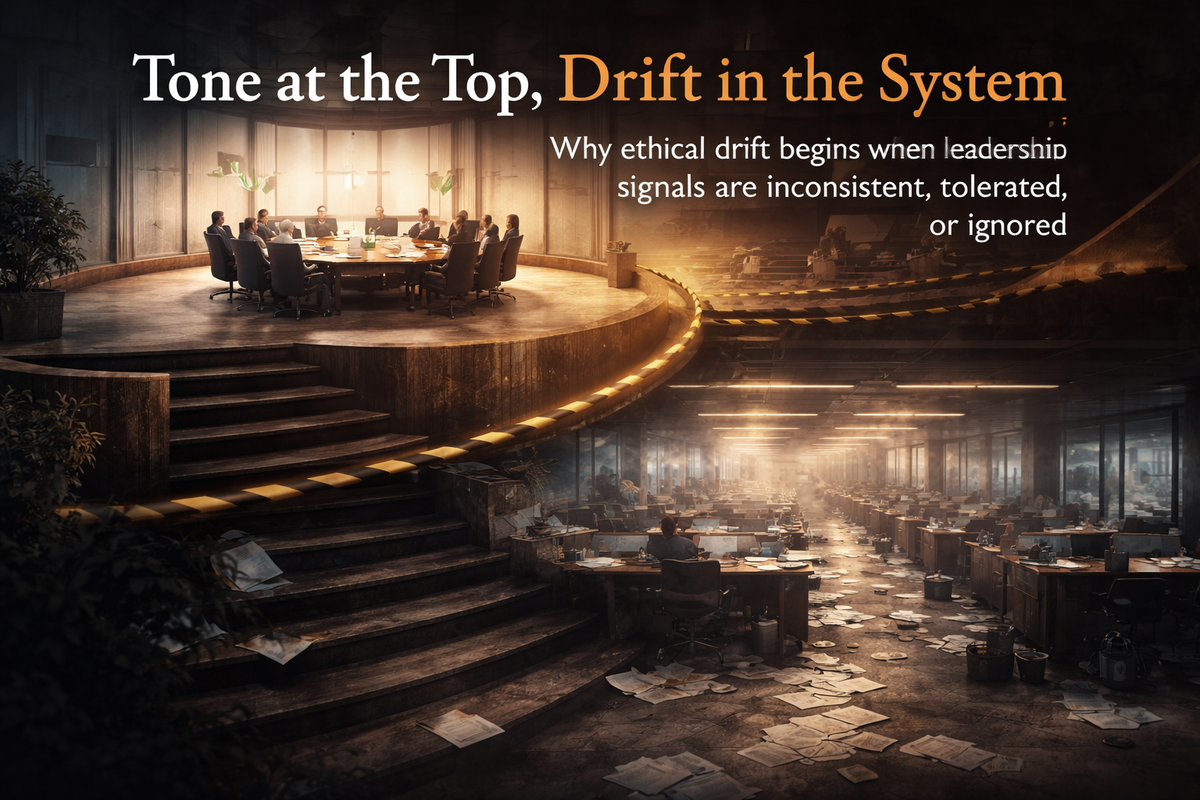
🏛️ When AI Writes the Discharge Summary: A Governance, Duty, and Systems Integrity Challenge
As generative AI tools move rapidly into clinical workflows, their use in discharge summaries and medication instructions is often framed as a productivity gain. Emerging evidence, however, suggests a more complex reality. While AI can produce outputs that are complete, fluent, and consistent, safety-critical risks — including hallucinations, incorrect instructions, and uneven performance across patient groups — persist. This article reframes AI-generated discharge communication not as a documentation tool, but as a governance and systems integrity challenge requiring board-level oversight, clear accountability, and robust control design.
 Institute for Systems Integrity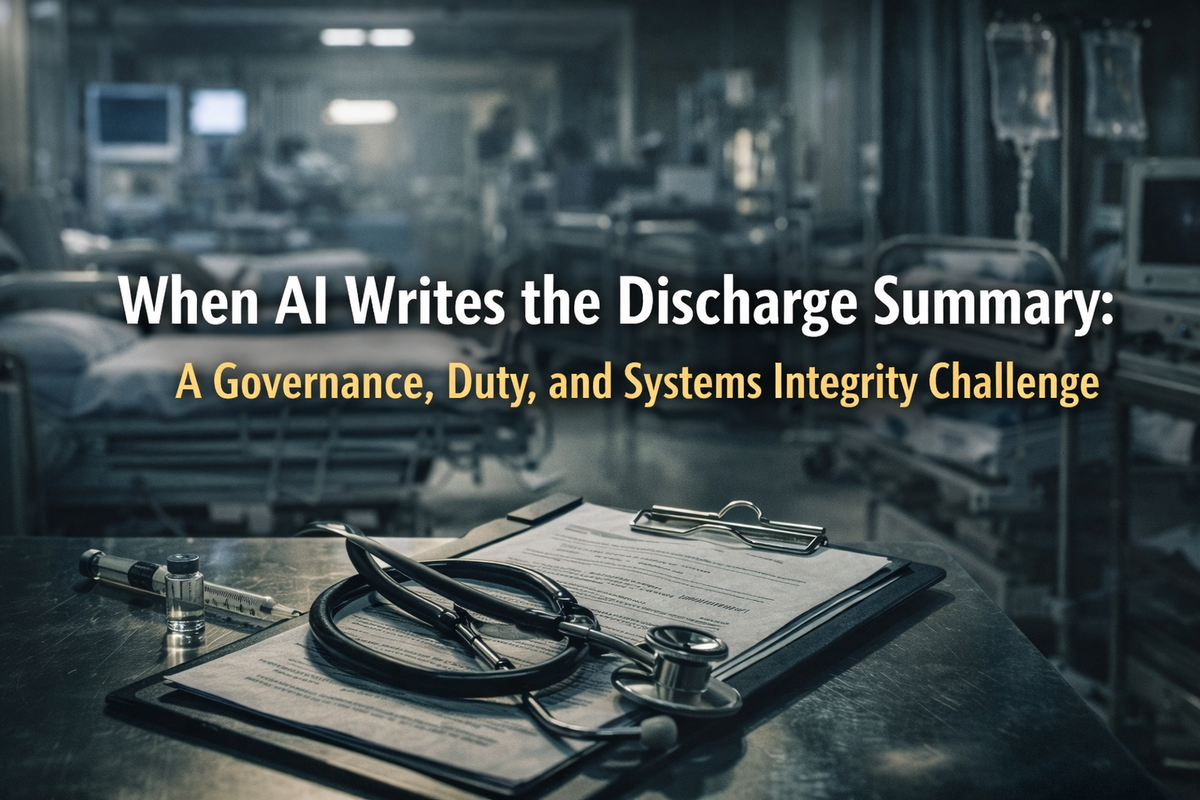
Adding Value Through Ethical Leadership: Why Board Behaviour Shapes System Integrity
Ethics is often discussed in governance as culture, values, or compliance. But within complex organisations, ethical leadership functions as something more structural. Board behaviour shapes decision environments, influences how risks are surfaced, and determines whether integrity is reinforced or gradually eroded. In this article, the Institute for Systems Integrity examines why ethical discipline at the board level is not symbolic governance, but a core mechanism through which systems remain credible, resilient, and effective.
 Institute for Systems Integrity
Carewashing: When “We Care” Becomes Organisational Self-Deception
Organisations increasingly speak the language of employee wellbeing. Leadership messaging emphasises that people matter, while wellbeing initiatives, resilience programs, and support services become more visible across workplaces. Yet many employees continue to experience chronic workload pressure, poorly managed organisational change, and inconsistent decision-making. This growing gap between organisational messaging and the lived experience of work is increasingly described as carewashing. This article examines how organisational expressions of care can unintentionally mask structural drivers of psychosocial risk and explores why genuine organisational care ultimately depends not on rhetoric, but on the design of work and the systems that protect people within it.
 Institute for Systems Integrity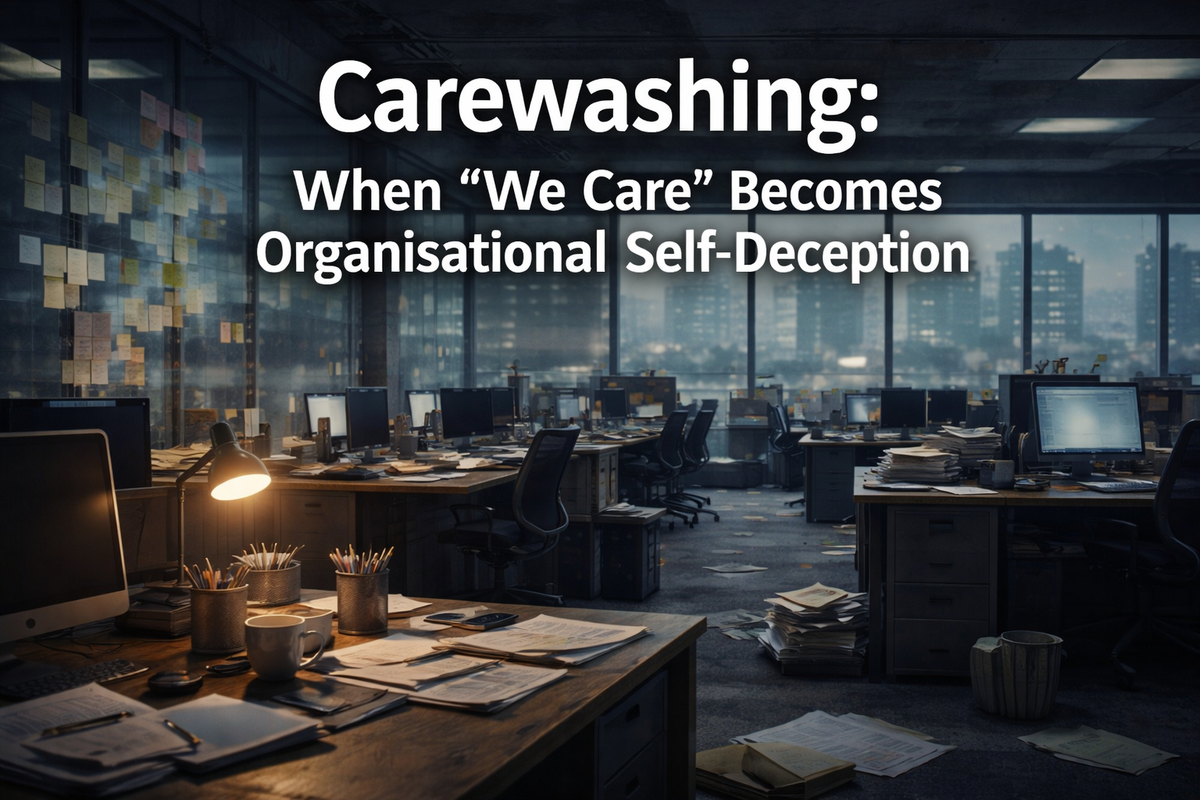
Water Governance in Healthcare Systems: A Planetary Boundary and Supply Chain Risk Analysis
Freshwater systems are a critical foundation of planetary stability, yet water governance rarely features in healthcare sustainability strategies. Healthcare depends heavily on reliable water for clinical care, sanitation, pharmaceuticals, and infrastructure, while global supply chains embed additional water risks. As climate change and over-extraction place increasing pressure on freshwater resources, healthcare systems face growing operational and systemic vulnerabilities. This paper examines water governance through the lens of planetary boundaries and supply chain risk, arguing that resilient health systems require stronger integration of freshwater risk into institutional governance.
 Institute for Systems Integrity
AI as a Systems Stress Test
Artificial intelligence is often discussed as a breakthrough technology capable of transforming healthcare and complex organisations. Yet as AI moves from experimentation to real-world deployment, a different reality is emerging. Rather than simply improving performance, AI frequently exposes deeper weaknesses in the systems it enters. In this paper, the Institute for Systems Integrity (ISI) examines why artificial intelligence often functions as a systems stress test—revealing hidden fragilities in data ecosystems, operational workflows, governance structures, and organisational readiness.
 Institute for Systems Integrity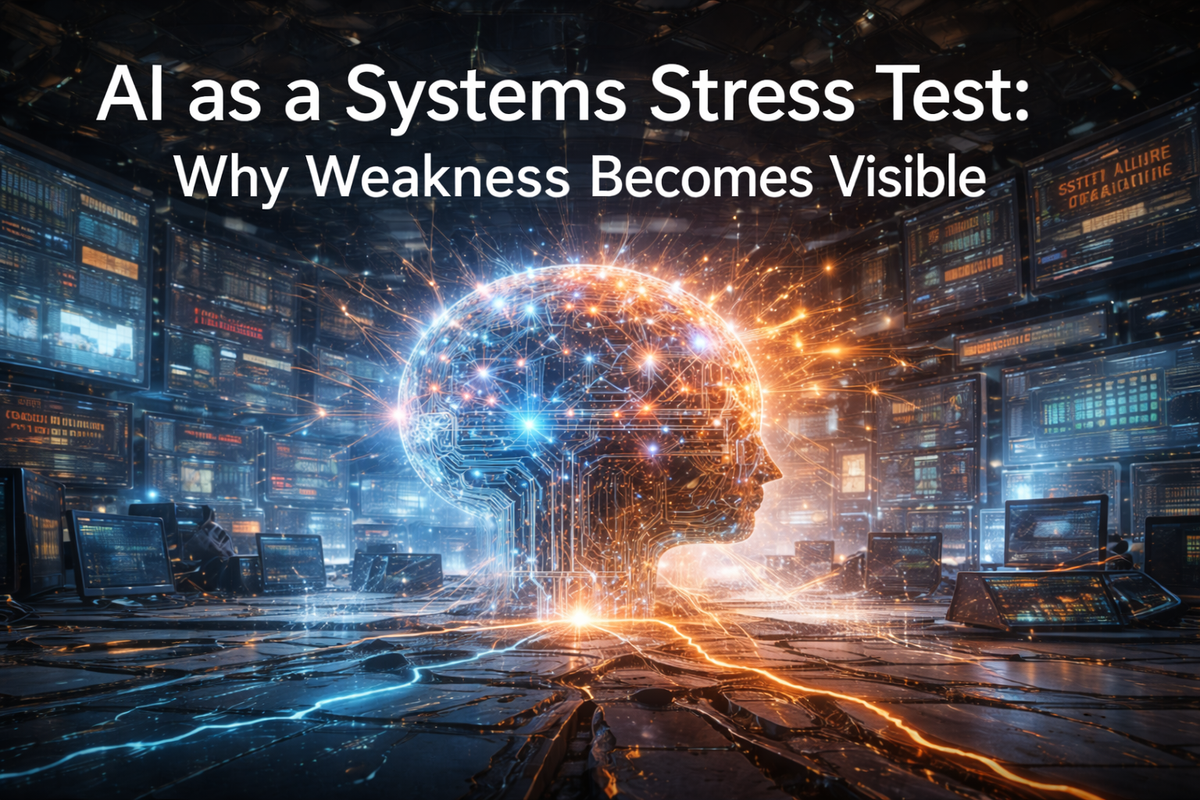
Low-Recoverability Plastics and the Governance Logic of Targeted Bans
Low-recoverability plastics represent a structural governance challenge rather than simply a waste-management issue. When products are designed with near-zero probability of recovery and high environmental leakage, downstream solutions such as recycling and clean-up become economically and operationally inadequate. In these cases, the core failure lies in product architecture and incentive design. Targeted bans, therefore, function not as symbolic environmental actions but as upstream governance instruments — correcting persistent design failures and preventing predictable harm before it enters circulation. From a systems integrity perspective, such measures reflect a transition from managing waste to managing risk at the level of design.
 Institute for Systems Integrity
Diversity as an Integrity Mechanism in Board Decision Systems
Diversity is commonly framed as representation. In complex governance environments shaped by AI disruption, sustainability transition, and systemic risk, it performs a far more critical function. In Diversity as an Integrity Mechanism in Board Decision Systems, ISI reframes diversity as a structural stabiliser within board architecture — strengthening weak-signal detection, ethical contestability, and decision resilience under stress. Perspective breadth is not symbolic. It is protective.
 Institute for Systems Integrity
Bed Block as a System Integrity Failure - Flow Breakdown at the Acute–Rehabilitation Boundary
Hospitals described as “full” are often signalling a deeper structural issue. This paper examines bed block not as a simple shortage of beds, but as a breakdown of flow integrity at the acute–rehabilitation boundary. Drawing on systems integrity frameworks and published health system evidence, it explores how capacity constraints, funding design, and fragmented accountability can combine under sustained stress to produce predictable congestion — even in well-intentioned systems.
 Institute for Systems Integrity
Circularity Under Clinical Constraints: Why recycled material claims do not guarantee circular outcomes in healthcare
Healthcare increasingly adopts recycled-content materials in the name of sustainability. But recycled inputs do not guarantee circular outcomes. Clinical safety, contamination risks, regulation, and waste pathways often reshape what is truly recoverable. This paper examines the gap between circularity claims and system-level realities.
 Institute for Systems Integrity
Digital Transition Risk: Why Non-Tech Boards Inherit Tech-Grade Exposure
Digital transformation is often framed as an operational or technological upgrade. This paper examines a less discussed reality: how digital dependency fundamentally reshapes enterprise risk. As organisations adopt cloud systems, electronic records, vendor-managed infrastructure, and AI-enabled tools, boards inherit technology-grade exposure irrespective of industry classification.
 Institute for Systems Integrity
Mentoring as Infrastructure: Learning, Power, and Risk in Organisational Design
Mentoring is widely treated as goodwill.
In practice, it behaves like infrastructure.
When designed well, it accelerates learning and strengthens judgment. When left to intention alone, it can narrow thinking, create dependency, obscure power, and amplify risk. This paper reframes mentoring as a learning control system, outlining benefits, predictable failure modes, and the safeguards required to protect judgment, independence, and decision quality.
 Institute for Systems Integrity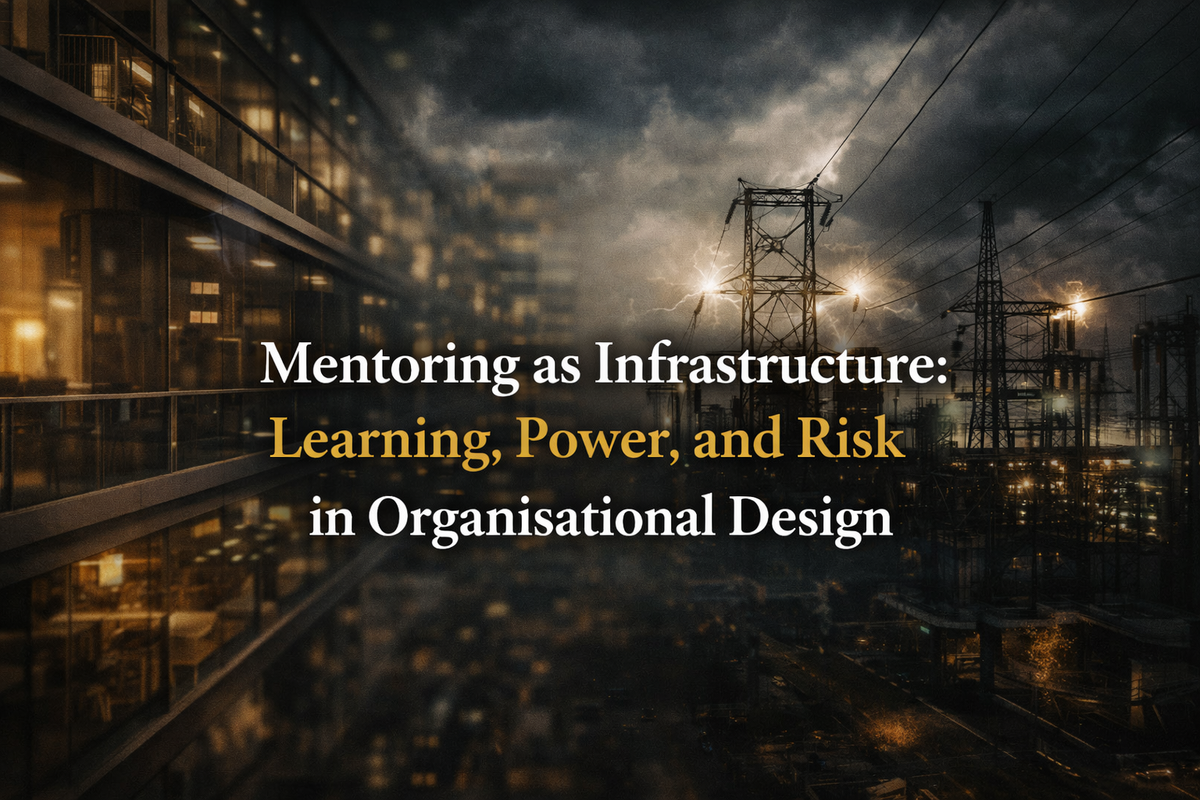
The Residual Risk Budget: Why “Net Zero” Still Requires Governance
Net zero is often described as a destination — emissions reduced, offsets applied, balance achieved. But this framing can obscure a critical governance reality. Even under credible net-zero pathways, residual emissions, residual harms, and residual uncertainties remain. They do not disappear; they are redistributed across systems, stakeholders, and time. This paper introduces the concept of the Residual Risk Budget — the remaining exposure that must be made visible, owned, and adaptively governed. Without this discipline, net zero risks become an accounting construct that masks ethical trade-offs and accelerates integrity drift.
 Institute for Systems Integrity
Beyond Legality: Why Boards Must Ask “Should We?”
In contemporary governance, legality is often treated as the primary decision threshold. Yet many organisational failures arise not from illegal actions, but from decisions that were lawful, compliant, and ultimately indefensible. This ISI paper examines the critical distinction between “Can we?” and “Should we?”, arguing that resilient boards must govern beyond permission alone and embed integrity as a core decision discipline.
 Institute for Systems Integrity
Governing Wicked Problems in Healthcare: An Integrity Architecture for AI, Sustainability, and Net Zero
Healthcare systems are entering a period of unprecedented complexity. Artificial intelligence, sustainability pressures, and net zero commitments are converging within institutions not originally designed to absorb this pace and scale of change. This paper argues that these challenges are best understood not as technical or compliance problems, but as wicked problems requiring a fundamentally different governance response.
 Institute for Systems Integrity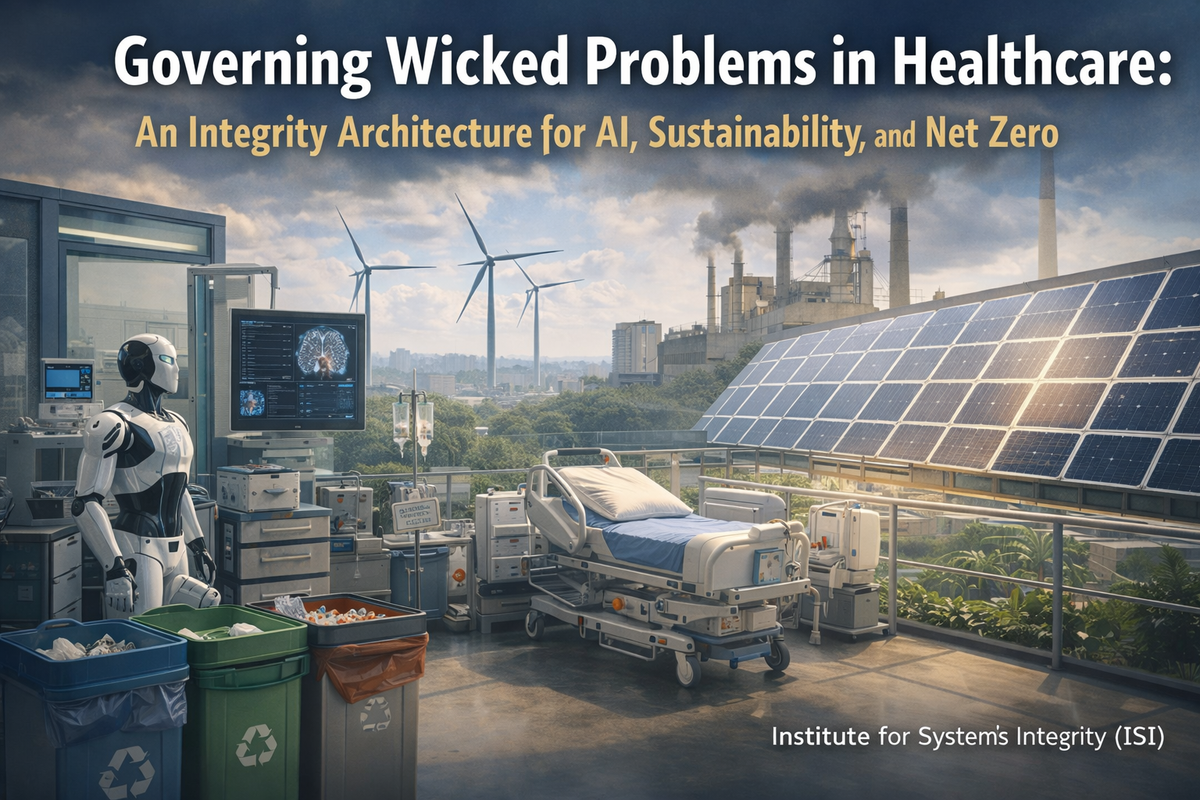
Beyond AI Compliance: Designing Integrity at Scale
This paper examines why most AI failures do not begin with flawed technology, but with governance systems that prioritise reassurance over judgment. As AI accelerates decision-making across complex organisations, traditional compliance frameworks struggle to detect drift, surface doubt, or correct harm before it becomes visible. This paper sets out a systems-level approach to AI governance—one that treats integrity as an architectural property, designed deliberately into authority, accountability, and the capacity to pause under pressure.
 Institute for Systems Integrity
Governing AI in Healthcare: A Practical Integrity Architecture
This paper sets out why AI governance most often fails after deployment, not at approval. In real clinical environments, performance, safety, and accountability are shaped by workflow, staffing, training, and local judgment—not the model alone. This paper presents a practical integrity architecture for healthcare AI: designed to detect drift, preserve clinical judgment, and enable correction under operational pressure, before harm becomes visible to patients or boards.
 Institute for Systems Integrity
The Systems Integrity Toolkit — Phase I
Why most integrity failures are not visible in time — and how systems allow harm to accumulate before anyone intervenes
Foundation Toolkit #1
This paper introduces the Systems Integrity Toolkit — Phase I, a governance architecture that consolidates ISI’s foundational research into a practical framework for identifying integrity risk before outcomes harden, showing how system stress, decision degradation, governance mediation, and failure dynamics interact long before harm becomes visible.
 Institute for Systems Integrity
Most systems don’t fail because they can’t see the problem.
They fail because they can’t change the things they’ve learned to protect.
As a companion to the Systems Integrity Toolkit — Phase I, this paper examines why integrity risks persist even after they become visible. It explores systemic refusal — the quiet protection of certain variables from change — and shows how governance under pressure can stabilise harm rather than correct it. Together, the Toolkit and this analysis describe a familiar condition in complex organisations: clarity without permission to change.
 Institute for Systems Integrity
The Failure Taxonomy: How Harm Emerges Without Malice - Why most disasters are not caused by bad people — but by predictable system drift
Foundation Article #4
This paper introduces the Failure Taxonomy — a structural model showing how harm accumulates in complex systems through drift, signal loss, and accountability inversion, without anyone intending it.
 Institute for Systems Integrity
The ISI Pause Principle explains why governance fails when reaction replaces reflection. Under pressure, systems that remove space between signal and response degrade judgment, suppress warning signs, and invert accountability. Pause is not a leadership trait — it is a governance control condition.
 Institute for Systems Integrity
Integrity is a System Property. Why outcomes reflect design, not intent
Foundation Article # 3
Integrity is often treated as a personal trait. This paper shows why it is better understood as a system property — shaped by how authority, accountability, and information are aligned under stress, and why outcomes reflect design rather than intent.
 Institute for Systems Integrity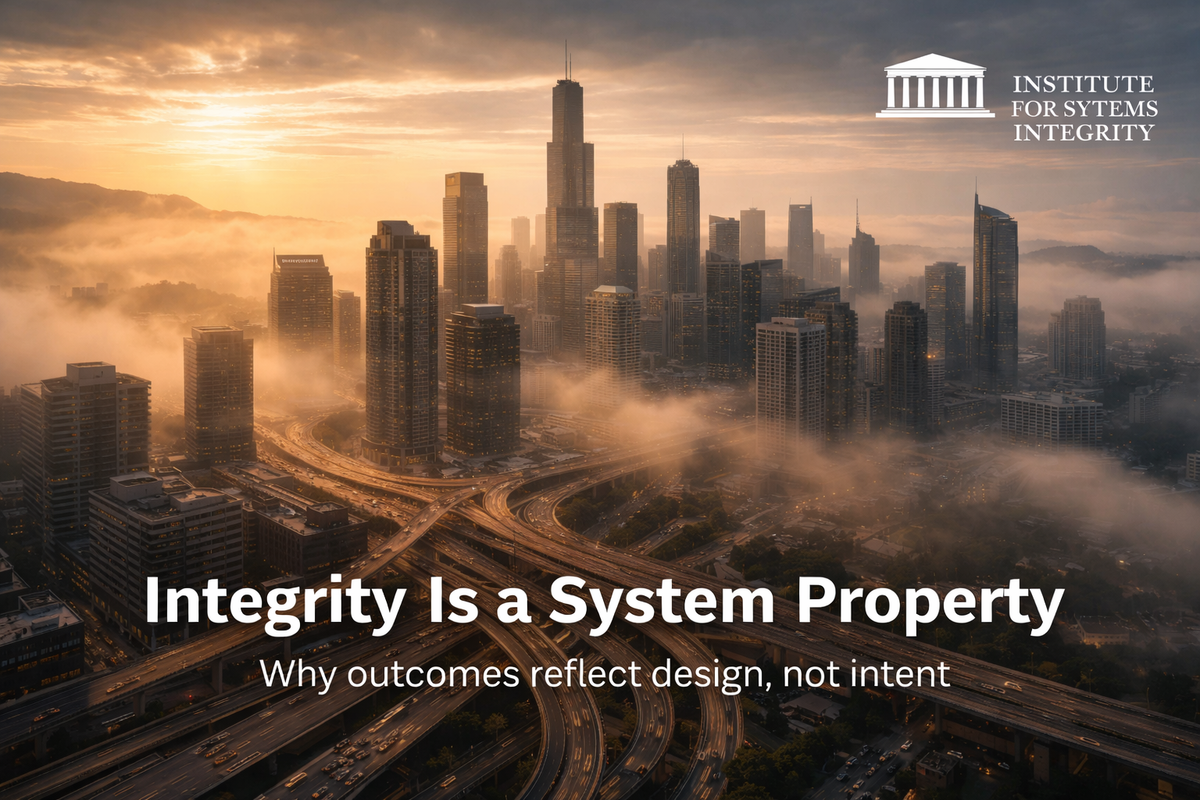
When the Constitution Becomes a Weapon
How governance drift turns compliance into a liability under system stress
This paper examines how constitutions, delegations, and oversight structures can remain legally intact while drifting out of alignment with real decision-making, allowing compliance to persist even as governance control erodes.
 Institute for Systems Integrity
Why Oversight Fails Under Pressure
How system stress distorts visibility, weakens governance, and produces predictable outcomes
Foundation Article # 3
Governance mechanisms designed for stable conditions often lose sensitivity under sustained stress.
Signals distort. Drift normalises. Oversight becomes selectively blind.
This paper examines why failures emerge quietly — and why outcomes are best understood as properties of system design, not individual intent.
 Institute for Systems Integrity
When Resilience Appears, Governance Has Already Failed. Why frontline heroics are a warning signal — not a success story
A companion paper to Why Oversight Fails Under Pressure examining how human resilience conceals system failure.
 Institute for Systems Integrity
Themes
Foundation Papers
Browse by theme
In addition to our foundational work, this section includes
Essays and perspective pieces
Governance and leadership reflections
Policy-relevant analysis
Research-informed commentary
Invited contributions from practitioners and scholars
Current publications appear below and will be updated as new work is released.
 Institute for Systems Integrity